пятница, 27 октября 2017 г.

Why Every Busy Woman Should Try Acupuncture

Why Every Busy Woman Should Try Acupuncture

When I found out my new health insurance covered twenty-five sessions of acupuncture treatments in a calendar year, I thought to myself, why not try it? I've always been curious about the benefits from this "alternative" form of healthcare. When posting on Facebook months ago that I was going to give acupuncture a go, it received multiple comments containing success stories in treating injuries that were otherwise considered unfixable and relief from all sorts of ailments including kidney stones, allergies, migraines, and chronic lower back pain.


I didn't have a targeted purpose for trying acupuncture, although I'd be lying if I didn't admit I was curious about the possibility of "curing" my never ending tummy troubles. Outside of that, I was looking at it from a more holistic and preventative perspective. I wanted to see if going to acupuncture on a regular basis would help with my stress levels, bouts of unwelcome anxiety, and keep me from getting the common cold.


I'd like to report that although acupuncture has been experimental for me, I have found success in small things such as my TMJ (from the stress I carry in my jaw), random aches and pains (usually related to pushing it too hard in the gym) and, I'm being 100 percent honest when I tell you, that I have not been sick one day this over the entire winter.


I've developed a beautiful and nurturing relationship with my acupuncturist, Mona Chopra and believe that she always has my best interest at heart when treating me. Over the course of the past four months, and seven sessions, she's provided me various resources like alternatives to coffee drinking and research on meditation including possible locations I might want to consider in New York. She's made recommendations for teas, books, supplements, and a myriad of health related products, some of which I've adopted into my daily routine.


For me, my hour-long acupuncture sessions are a time to relax, to shut off my mind, and to be in the presence of someone I truly trust with my mind and body. When I consulted with Mona over the course of our relationship about why every busy woman should try acupuncture here are some interesting reasons that resonated most with me.


•First and foremost, prevention. This was my number one reason for trying acupuncture and although it's not the most common reason to try it, "most people try acupuncture for the first time because they have some kind of ailment be it a pain, digestive distress, emotional imbalance, or in some way feeling ‘off’ or ‘not okay.’ Acupuncture can and should be looked at like ‘preventative medicine,’ instead of waiting to get a diagnosis that you have X or Y condition," says Chopra. If you see an acupuncturist, she or he will be able to detect much more subtle imbalances in your system and work to correct them. I wholeheartedly believe that prevention is the best medicine and we, as a society, could enhance our immune systems by taking this approach, therefore being less likely to need medications and reducing the possibilities of getting sick. Preventative health is key, however you seek it—eating healthy, taking supplements, staying active, and/or acupuncture.


• Acupuncture can be used to offset stress and the effects of aging. Research proves that neglected stress can wreak havoc on our bodies and minds, leading to all kinds of ailments ranging from digestive distress, painful periods, chronic pain, hormonal imbalances, allergies, blood pressure and sugar imbalances, anxiety, depression, insomnia, and fatigue. Must I go on? Cosmetically speaking, wrinkled skin, grey hairs, thin hair, and dark circles under the eyes are no strangers to the extremely stressed body. Acupuncture has been proven to help offset these adverse effects and can help promote a more youthful energetic you—on the inside and out. Are you building a career but one day hope to have children? Join the club. Acupuncture can be a powerful modality for promoting fertility too, when the time comes!


• Acupuncture can help you understand your body and mind better. "It can help you see yourself in a whole new light," Chopra says. Acupuncture is so much more than just being stuck with tiny needles. Imagine having someone sit with you with for one full hour (or more) and listen to you express your concerns about your health and your life as a whole. Imagine that person asking key questions that no medical doctor or psychotherapist may have asked you (because it's not in their training and/or paradigm to ask). Questions that will help you better understand why you are the way you are, why your body may be acting the way it's been acting. And, in addition to being treated with acupuncture to help regulate your system, also offering suggestions for your diet and lifestyle that may help you make the changes you want to see in your life.


The next time you have trouble sleeping, difficulty concentrating, have paid the doctor a visit only to receive a 'clean bill of health' but know that something else is lurking underneath the surface, consider acupuncture. Your acupuncturist may be able to detect more subtle imbalances that could be leading to those distressing symptoms.


Furthermore, acupuncturists are trained to treat not only the “symptoms” but the “root causes,” which means making changes on deep fundamental levels of your being. If you have ever had the thought, "I've always been like this" or "I'm just an anxious kind of person," an acupuncturist can not only help you understand how these constitutional tendencies or learned habits are thought of in Chinese medicine, she or he can also help you to see how unblocking certain channels or nourishing others may help to free you from those ways of being.


Signing Off Glad I Tried Acupuncture,

Renee


Mona Chopra, MA, MS, is a New York state licensed and nationally board certified (NCCAOM) acupuncturist with over a decade of experience in mind-body medicine. Mona is also a therapeutic yoga instructor, a certified hypnotist and a childbirth doula. Mona enjoys treating people of all ages and walks of life, and is committed to finding ways of making acupuncture and holistic medicine accessible to more and more people. After all these years, Mona continues to be awe-inspired by the immense potential of the human body and spirit to heal. For more information or to schedule an appointment, call: 917.834.2124 or email: mona@peopletreewellness.com. More information about Mona Chopra, L.Ac., and about acupuncture visit www.peopletreewellness.com.


Original article and pictures take www.shape.com site

среда, 18 октября 2017 г.

Why Acupuncture Works for Infertility

Why Acupuncture Works for Infertility


Big, giant kudos to Today Show correspondent Bobbie Thomas, who's currently going through her third round of IVF and documenting it all for viewers and fans. With her brave #nomorewhispers campaign, she's using social media and Today segments to show every step of the process—from getting bloodwork and ultrasounds done to having an egg retrieval procedure. She even showed off her belly bruises from all of the hormone injections… Way to keep it real, Bobbie!


So when I saw Thomas undergoing acupuncture and cupping treatments during her most recent Today segment, I could immediately relate. Like a lot of us, the first time I ever heard about acupuncture being used as an infertility treatment was during the Sex and the City episode where Charlotte seeks it out to help overcome her reproductive challenges. A lifelong needle-phobe, I've always avoided the mere mention of acupuncture, but when I found out I had diminished ovarian reserve in March, I changed my tune rather quickly. I started seeing acupuncturist Carolyn Leigh every week, and six months later, she has become a trusted friend, advocate, and go-to guru for all things fertility. (Plus, she gives great caviar prescriptions.)


At each of my sessions with Leigh, I receive traditional acupuncture as well as cupping, an ancient Chinese treatment said to increase blood flow and promote healing. Though the benefits aren't always tangible, I'm a believer—especially after witnessing its magic in action during my first IVF cycle. I had only four very small follicles at the start, and when I upped my acupuncture visits to three times a week, they started growing more quickly and the amount increased to six follicles. (Not an easy feat for someone with diminished ovarian reserve.) Thomas also touts the benefits, saying that she's seen a marked improvement between her first cycle, when she didn't do acupuncture and cupping, and when she incorporated them the second time around.


Research supports acupuncture's efficacy too—one study published in Fertility and Sterility found that patients who received acupuncture before and after embryo transfer had significantly higher pregnancy rates than those who didn't.


"It helps to improve the chances of pregnancy by keeping the body in balance," says Leigh. "I've seen people get pregnant after just one month of treatment, and for others, it can take up to a year; it depends on the complexity of whatever it is that is causing the infertility in the first place."


Some acupuncturists rely on the pulse as a diagnostic tool, but Leigh likes to look at her patients' tongues to see what's happening inside the body. Her sessions last 30 to 45 minutes, as that provides ample time for the needles to work their magic. "With normal breathing patterns, it takes 18 to 20 minutes for your chi to make a full circuit through the system," she says.


There's also the fact that receiving acupuncture and/or cupping can help decrease stress and anxiety brought on by infertility. "My acupuncturist says it's all about blood flow and de-stressing, and it really does help," said Thomas on Today.


For those who don't have access to acupuncture, foot reflexology can be a viable alternative, according to Leigh. "I've seen people get really good results that way, as you're stimulating the same points we'd be using with acupuncture on the foot," she explains.


As for cupping, Leigh says it doesn't necessarily have a direct effect on infertility, but it can help those who have circulation issues. "Some people hold a lot of tension and inflammation in their back and shoulders, and if that's the case, it would help balance the whole system out. I normally won't do cupping unless there are indicators of it being necessary."


Check out Thomas' latest Today segment, in which she gets needled and cupped on the air.


Jen Jones Donatelli is an author and journalist whose work and photography have appeared in Conde Nast Traveler, LA Confidential, Natural Health, Variety, San Francisco, Whole Life Times, Clean Plates, Total Beauty, and many more. When not typing the day away at her laptop, she is also a journalism instructor for Ohio University, MediaBistro, and StoryStudio Chicago. Specializing in all things lifestyle and wellness, Jen is passionate about the topic of fertility—and thrilled to explore it more fully for REDBOOK. She lives in Los Angeles with her husband, Joe, and beloved spaniel pup, Tanner.


Related:


Original article and pictures take www.redbookmag.com site

четверг, 5 октября 2017 г.

Why Acupuncture Works for Anxiety Relief

Why Acupuncture Works for Anxiety Relief
Research shows that acupuncture for anxiety is effective.

You might think acupuncture is for hipsters who don’t believe in Western medicine or for your aging parent with chronic back pain, but a growing body of research shows that acupuncture can help treat a condition that affects everyone from time to time: anxiety.


Managing severe anxiety can be tricky because it generally includes therapy, which might not provide results for months, according to the Anxiety and Depression Association of America. What's more, it can require anxiety medication, which can have serious side effects, says Ladan Eshkevari, PhD, CRNA, LAc, a certified acupuncturist, a physiologist, and the assistant director of the Nurse Anesthesia Program at the School of Nursing & Health Studies at Georgetown University in Washington, D.C. Yet when acupuncture for anxiety is effective, symptoms lessen after the first few visits, and practitioners like Eshkevari are confident it attacks the problem at its roots.


How Acupuncture for Anxiety Works


Ancient Chinese medicine describes an energy force called Qi that regulates the body’s overall health, according to University of Chicago Medicine. Like blood in the circulatory system, Qi moves throughout the body via pathways called meridians. When factors like injury, stress, poor nutrition, or a change in environment disrupt the flow of Qi, health issues follow, according to the University of Miami Health System. By inserting needles at specific points in the body, acupuncturists restore the balance of Qi and the body’s overall health, University of Chicago Medicine reports.


This concept might seem outdated to some, but Daniel Hsu, DAOM (Doctor of Acupuncture and Oriental Medicine), LAc, a practitioner at New York AcuHealth Acupuncture in New York City, says Qi is just a metaphor for metabolic function, or the chemical reactions constantly taking place in the body.


Acupuncturists insert each needle half a millimeter away from a nerve, Dr. Hsu explains. Depending on where the needles go, acupuncture can cause the nervous system to produce painkilling chemicals, jump-start the body’s natural ability to heal itself, or stimulate the part of the brain that controls emotions, including anxiety. All of these results, Hsu adds, can help people feel more balanced and treat a variety of illnesses.


The Mechanics of Acupuncture for Anxiety Management


Hsu says acupuncture has increased in popularity since the 1970s simply because it works, and now there’s growing research supporting its effectiveness for anxiety and other mental conditions.


For instance, in a study published online in October 2013 in the Journal of Acupuncture and Meridian Studies, students who underwent a 20-minute acupuncture session were found to have less anxiety and better memory immediately afterward than those who didn't have acupuncture.


Why does it work? Eshkevari explains that external circumstances beyond your control can set off your anxiety and that acupuncture allows your body to take back control.


“We’re constantly under stress and pressure to perform, which can bring on disease and other serious health issues,” Hsu says. “Acupuncture is great for maintenance. It helps a long life become a better-quality life.”


How does it work? Led by Eshkevari, researchers at Georgetown University used lab studies to demonstrate that acupuncture slows the body’s production of stress hormones. Their findings were published in the April 2013 issue of the Journal of Endocrinology.


Few procedures work 100 percent of the time. That includes acupuncture, but it does have benefits that conventional treatments like psychotherapy and medication do not, Eshkevari says. She explains that side effects, such as bruising and dizziness, are minimal and uncommon, whereas some prescription drugs can have serious side effects and can lead to dependency.


Unlike with counseling, people treated with acupuncture often see results after one session, and the results improve with continued treatment. Hsu says acupuncture is particularly helpful for people who want to limit or stop drug use — prescription or otherwise. Because it regulates the body’s chemical balance naturally, acupuncture can even prevent people from needing medication at all, he says.


Getting Started With Acupuncture


When it comes to trying acupuncture, you have nothing to lose, Hsu says. With a certified acupuncturist, the risks are almost nonexistent and are far outweighed by the potential benefits. The majority of Eshkevari’s patients have told her they sleep better and have a stronger sense of overall well-being after just a few sessions.


If you're already receiving treatment for anxiety, Eshkevari suggests adding acupuncture to your current regimen. If you decide it works for you, you can work with your doctor to wean off anxiety medication. First, though, contact your insurance provider to find out whether it covers any acupuncturists in your area. Then talk with a practitioner — ask questions and openly discuss a potential treatment plan.


Original article and pictures take images.agoramedia.com site

пятница, 29 сентября 2017 г.

What’s a Raw Food Diet, Really

What’s a Raw Food Diet, Really

For those who follow a raw food diet, cooking is so last century. But while forgoing fire may be trendy among some bloggers and health fiends, eating all raw, could be considered extreme. Is the raw food movement promoting better health, or is it just another over-the-top fad? We chatted with some experts to get the skinny on the rules of this lifestyle—and to find out if you should unplug your stove for good.


The Raw Food Rulebook


As you probably guessed, the primary rule of the raw food diet is that you can’t eat cooked food. “There are some conflicting recommendations around this, but the general rule seems to be that food shouldn’t be heated above approximately 104 degrees to 115 degrees, depending on your source,” says Marjorie Nolan Cohn, R.D.N., a spokesperson for the Academy of Nutrition and Dietetics.


Beyond swearing off cooking, all foods need to be organic, whole, and unprocessed, says Cohn. Converts also avoid animal products, such as dairy, meats, and eggs. In addition, tap water is a no-no, and only high-quality filtered water should be consumed. Alcohol is also off-limits, but juicing is encouraged (though not 100 percent mandatory), says Cohn.


Two Sides of the Salad Bowl


When cooking is off-limits, your diet becomes pretty rich in fruits and vegetables. And that’s where any potential health benefits come in, says New York-based dietitian Jessica Cording, R.D., C.D.N. More fruits and veggies equals plenty of the vitamins, minerals, antioxidants, and other nutrients. You may also find yourself losing some weight.


“It’s also a great way to push yourself to try new recipes and get creative in the kitchen,” she says.


But eating all raw is hard and nutrient deficiencies aren’t uncommon, says Cohn. In particular, getting enough of the nutrients that are primarily found in animal-based foods such as total protein, calcium, iron, B12, zinc, and omega-3 fatty acids will take some planning on a raw diet. “One can go raw or vegan, but the upkeep to ensure all nutrient needs are met is a major challenge, and needs to be taken seriously,” she says.


It’s also a myth that cooking foods destroys nutrients, as raw food gurus will have you believe. In fact, some foods are enhanced with cooking, says Cohn. For example, lycopene in tomatoes and beta-carotene in carrots are enhanced and made more bioavailable after cooking, meaning they’re more easily absorbed into your system so you can actually reap the health benefits, she shares. Other potential issues include overdoing it on healthy fats such as avocado, nuts, and seeds, and possible GI discomfort from the high intake of fiber, says Cording.


Should You Try It?


While Cohn says she doesn’t recommend going raw, if you want to give the diet a try, it’s a good idea to work with a nutrition professional who specializes in raw or vegan diets at first, to ensure you’re meeting all your nutrition needs. You may also need to consider supplements.


“I totally encourage whole foods and minimal processing, but really think about what’s realistic for your lifestyle,” says Cohn.


If you don’t want to fully commit (because, c’mon, pizza), start by honing in on the specific aspects of going raw that appeal to you, says Cording. Eager to eat more fresh produce? Make a point of including fresh fruits and vegetables throughout the days or eating a big salad for lunch, she suggests.


“Another option is to play around with how many of your meals are raw,” she says. “Maybe you have one raw meal per day if that feels like a good fit for you, or you opt to make a fruit and veggie smoothie with nuts or raw plant-derived protein powder for breakfast.”


Original article and pictures take www.corespirit.com site

среда, 13 сентября 2017 г.

What Waking Up At Different Times Of Night Means, According To Chinese Medicine

What Waking Up At Different Times Of Night Means, According To Chinese Medicine

If you sleep through the night without waking up, then you are very lucky. More than 40 percent of Americans report having trouble staying asleep, according to the National Sleep Foundation. While there are many theories about why this is, waking up at different times of the night has different meanings, depending on what time you are roused from slumber, according to Chinese medicine.


"Time at which you go to sleep or wake up could be sending you a warning message you shouldn’t ignore," an article on Wikr.com noted. And New York Magazine reported that our obsession with sleeping through the night is actually a modern phenomenon that began in the 1800s, so don't freak out if you wake up when you think you should be asleep. The magazine noted that historian Roger Ekirch examined how the traditional pattern for nighttime sleep was to do it in two shifts of “segmented sleep.”


"These two sleeps — sometimes called first and second sleep, sometimes 'dead sleep' and 'morning sleep' — bridged an interval of 'quiet wakefulness' that lasted an hour or more," Benjamin Reiss explained in New York Magazine. "During the period of nighttime wakefulness, Ekirch showed, different cultures elaborated rituals — of prayer, lovemaking, dream interpretation, or security checks — and while the rituals varied, the pattern itself was so pervasive as to suggest an evolutionary basis that somehow became disrupted in the modern West."


If you're not sleeping through the night, you are completely normal. And, if you're waking up — especially at certain times — your body and mind might be trying to tell you something. Here's five things to pay attention to.


1. Trouble Falling Asleep Between 9 And 10 p.m.? You're Stressed


GIPHY

If you feel wound up during the time when you should be winding down, you're most likely stressed. And in today's political climate, who isn't stressed? Practicing meditation before bed can help lull you off to dreamland. Additionally, Marie Claire reported that Yoga Nidra, also known as sleep meditation, can help you get those coveted Zzzs.


"The difference between normal sleep and Yoga Nidra [sleep meditation] is that during sleep, your subconscious mind takes over, whereas with Yoga Nidra, your conscious mind is awake and alert," Emma Richards noted in Marie Claire. "Another key difference is that during sleep, your subconscious mind cannot leave behind your worries and stress, but during Yoga Nidra, your conscious mind can, making it a form of sleep therapy."


Learn how to practice sleep meditation.


2. Waking Between 11 p.m. And 1 a.m. Signals Emotional Disappointment


GIPHY

If you're waking up between 11 p.m. and 1 a.m., you could be emotionally disappointed. According to traditional Chinese medicine, this is the time when the gall bladder is active, and the gall bladder is tied to emotions.


"The gall bladder engenders the capacity for courage and bravery. In the West, we speak of having gall to express this quality," noted Chinese medicine practitioner Robert Keller. "Weakness in gall bladder function may manifest with a tendency towards fear and timidity. While the liver is responsible for planning and organizing, the gall bladder is responsible for decisiveness and execution. Inability to act may be tied to a gall bladder imbalance."


Wikr.com advised that people experiencing this type of wakefulness should practice mantras and try to forgive and accept themselves as they are.


3. Waking Between 1 And 3 a.m. Means You're Angry


GIPHY

Waking up between 1 and 3 a.m. could mean you're experiencing built-up anger. "This energy is connected to the liver and associated with anger and an excess of yang energy," Wikr.com reported. Additionally, the Traditional Chinese Medicine World Foundation noted that liver-function problems and anger are closely related.


"Anger is the emotion associated with the liver. If you are often irritable, get angry easily, have trouble unwinding from the day’s activities, have trouble reasoning or going with the flow and letting things go, you are experiencing a liver function problem," according to Traditional Chinese Medicine World Foundation. "Experiencing these emotions chronically or excessively can seriously unbalance the function of your liver."


Wikr.com suggests drinking a cold glass of water and practicing meditation to help release angry emotions.


4. Waking Between 3 And 5 a.m.? A Higher Power Is Trying To Tell You Something


GIPHY

The time between 3 and 5 a.m. is related to the lungs and sadness, according to Wikr.com. Additionally, a higher power may be trying to tell you something. "If you wake up at this hour it is because a higher presence wants to guide you to a bigger purpose."


In traditional Chinese medicine, the lungs are tied to sadness and depression, and deficient lungs signal not wanting to inhale emotionally.


"Whenever you suffer from a lung deficiency and you have any of the aforementioned symptoms [desperateness, pessimism, feeling like a victim, injustice, and emotional coldness] it is very important that you reevaluate the philosophy by which you live," The Joy of Wellness noted. "Find new ways of focusing on life and find alternatives for self-motivation. Learn more about yourself and about your spiritual power that lies within yourself."


Wikr.com suggests performing meditation and breathing exercises to get back to sleep.


5. Waking Between 5 And 7 a.m. Signals Emotional Blocks


GIPHY

Being awakened between 5 and 7 a.m. is tied to intestinal health and can signal emotional blocks.


"An emotional imbalance in the large intestine energy could manifest as chronic constipation, but it could also manifest as an emotional tendency to not let things go," Stepping Stone Acupuncture and Wellness explained. "Or chronic constipation could lead to certain destructive patterns of negative emotions. These aspects are not separate and distinct, but different manifestations of the same core imbalance."


What's more, according to traditional Chinese medicine, the function of the large intestine is to let go of things that don't serve us. This relates to both physical and emotional aspects. "On an emotional level, the large intestine does the exact same thing," Stepping Stone Acupuncture and Wellness noted. "Healthy large intestine energy allows us to let go of patterns of negative thinking, destructive emotions, and spiritual blockages that we create that prevent us from being our best."


Wikr.com advises trying to go to the bathroom, and stretching before going back to sleep.


Basically, traditional Chinese medicine focuses on a mind-body connection, and if this speaks to you it's worth learning more about what your body might be trying to tell you. Because it's not all in your head.


Original article and pictures take cdn.bustle.com site

среда, 6 сентября 2017 г.

What is Nasya Oil & Why You Should Put It In Your Nose

What is Nasya Oil & Why You Should Put It In Your Nose

How would your life be different if your breath were more relaxed, more fluid—less disturbed by congestion, cough, stress, or anxiety—if you could simply breathe easy? Most of us can relate to the panic we experience when we can’t catch our breath for some reason. Continue Reading >


Nasya is the nasal administration of medicinal herbs, decoctions and oils. Different types of substances are used to treat many various aliments. Nasya oil is an herbal infused oil which is both nurturing and nourishing, alleviating numerous discomforts that occur above the clavicle area.


Nasya oil is a balancing formula for all doshas and especially good for vata dosha. This therapy is most commonly indicated for dry nasal passages, hoarseness of voice, stiffness in the head, neck and jaw area, headaches and certain eye and ear problems. It relieves mental and emotional stress, anxiety, fear and negativity.


Prana, the vital life force, enters our bodies through the breath. Lubrication of the nasal passages with medicated oil provides subtle moisture to the air we breathe and affects the higher cerebral faculties and sensory organs. It promotes clarity of perception, intuition and stimulates memory. Nasya enhances cerebral circulation, restoring and balancing prana in the body.


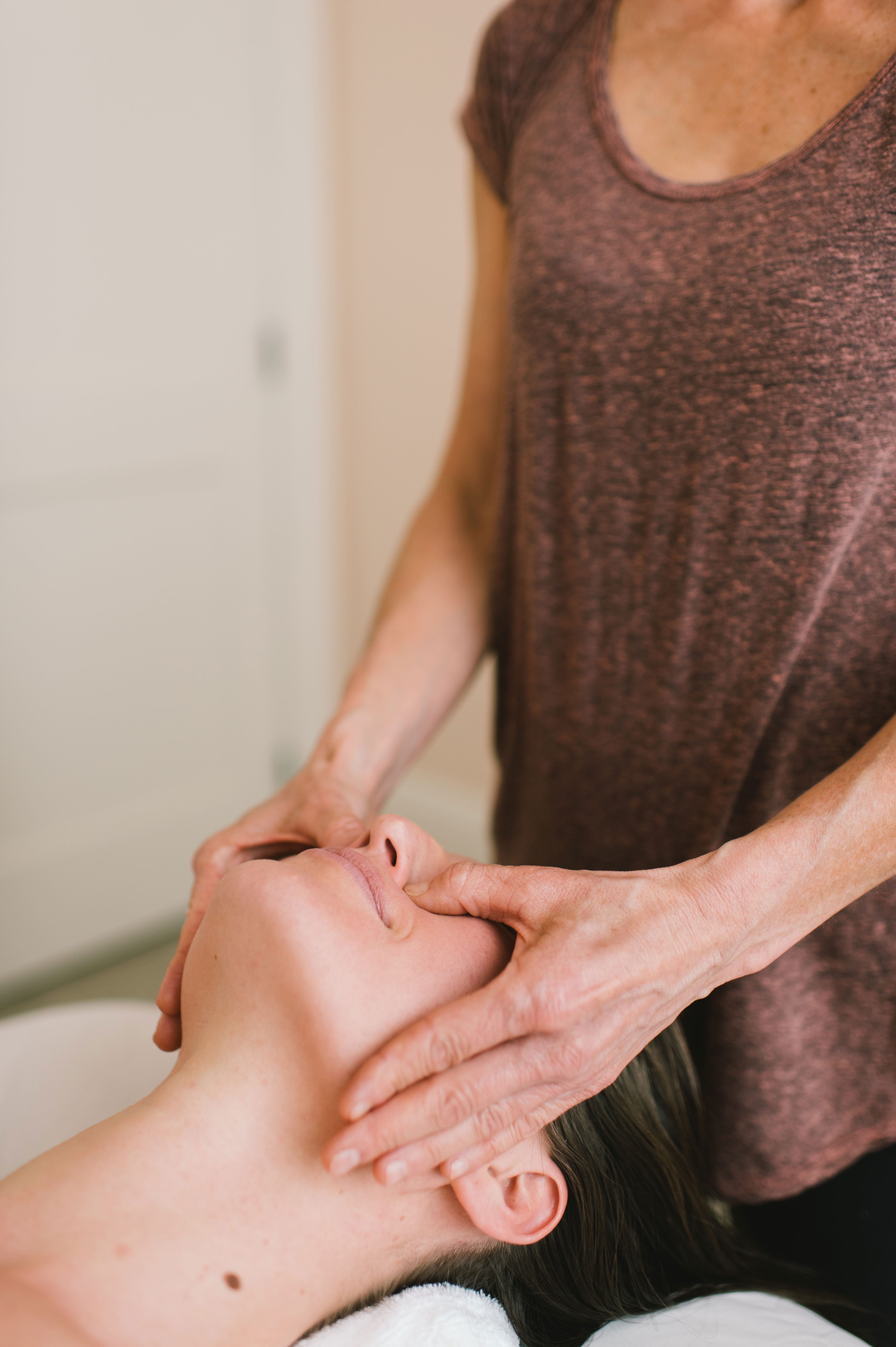
Nasya Massage

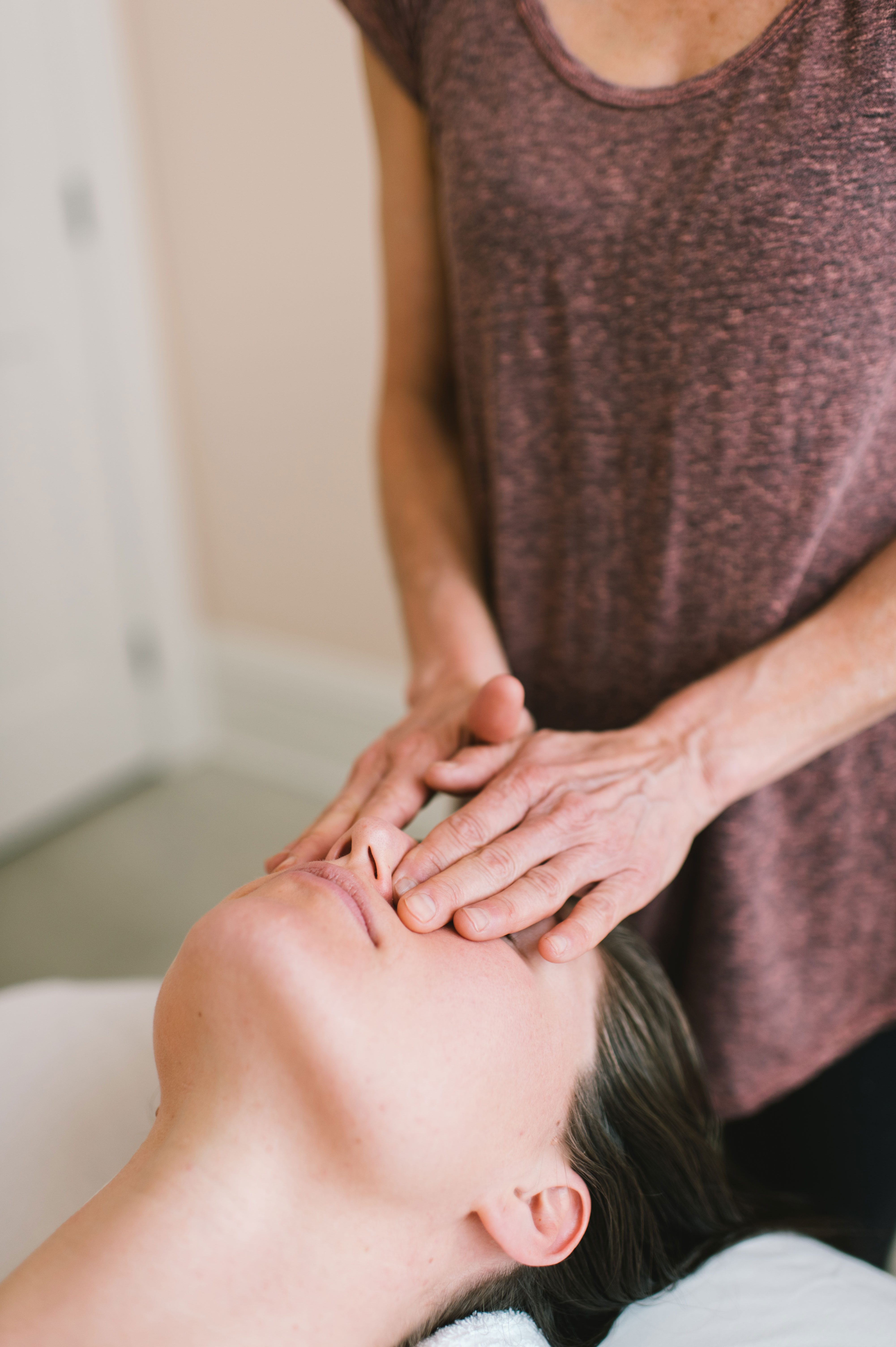
Nasya Massage 2

Here is a simple procedure to follow for self-administration of nasya:


  1. Begin by comfortably lying down on your back and tilting your head back with your nostrils opening towards the sky. If you are lying on a bed, you may hang your head off the edge of the bed, or place a small pillow beneath your neck for support.
  2. Place 5-10 drops of nasya oil in each nostril. With skill, you can administer the oil, drop by drop, circling the inside perimeter of the nostril, thoroughly coating the nasal membranes.
  3. Take a big sniff in, then rest for a few minutes allowing the nasya to penetrate.

Another method of administration of nasya oil is called Marshya nasya or Pratimarshya (if practiced daily). This is a very useful method when lying down is not always convenient.


  1. Place a drop of nasya oil on the little finger and gently insert it into the nostril.
  2. Gently massage the inner walls of the nasal passage.
  3. Alternate left and right nostrils until each nostril has received a total of three applications of oil.

The lubrication and gentle massage helps to alleviate stress and release any tension in the tissues. One commonly asked question at Banyan is, 'Can I use the nasya oil immediately following the neti pot wash?' This is not recommended. Especially if these therapies are new to you, it is wise to wait at least a day after washing with the neti pot, ensuring full drainage of the saline, before administering nasya.


Other contraindications include: pregnancy, menstruation, immediately before or after eating, intoxication, or acute fever.


By taking just five minutes a day to incorporate this simple treatment into your daily ayurvedic regime, you can enjoy the many healing benefits of nasya!


Shannon Mooney


Shannon Mooney has a B.A. in English and French from SUNY Albany. She is a graduate of the Ayurvedic Institute in Albuquerque, New Mexico. She continued Ayurvedic studies with Alakananda Ma at Alandi Ashram in Boulder, CO. Shannon enjoyed teaching yoga and Ayurvedic workshops in Madison, WI and Chicago. After having her own children, she began to delve deeper into Anthroposophy, fiber arts, and the holistic approach of Waldorf education. She has been the assistant Handwork teacher at the Mountain Laurel Waldorf School in New Paltz, NY. Completing her four year training in the Applied Arts program at the Fiber Craft Studio at Sunbridge in Chestnut Ridge, she now teaches at Primrose Hill School, in Rhinebeck, NY.


You May Also Like...


The tradition of dinacharya (daily routine) is one of the single most powerful Ayurvedic tools for improving overall health and wellbeing. Even if you are brand new to Ayurveda, it won’t be long before you hear something about the importance of doing a number of things – like eating, sleeping, and working – at roughly the same times each day. Continue Reading >


Abhyanga is the anointing of the body with oil. Often infused with herbs and usually warm, the oil is massaged into the entire body before bathing. It can be beneficial for maintaining health and is used therapeutically for certain disorders. Abhyanga can be incorporated into a routine appropriate for almost everyone. Continue Reading >


The nose is the direct route to the brain and also the doorway to consciousness. It is the entrance for prana, the life force, which comes into the body through the breath. Healthy uncongested breathing is important to ensure proper flow of prana throughout the head and body. Continue Reading >


Original article and pictures take www.banyanbotanicals.com site

понедельник, 28 августа 2017 г.

What Happens to Your Body When You Get Acupuncture

What Happens to Your Body When You Get Acupuncture

When hair-thin stainless-steel needles are strategically placed into your skin at specific acupuncture points, they help balance out your qi, or energy center, leading to a calmer, healthier you. At least, that's the traditional Eastern explanation. The modern scientific hypothesis? The pricks cause tiny sensations that activate your nervous system and brain, promoting a relaxation response. Whatever the exact mechanisms, regular acupuncture plays a role in easing...


Physical Pain

Just a few precise insertions can stimulate your peripheral nervous system, triggering a chain reaction involving painkillers such as endorphins. A recent analysis of 18,000 patients found acupuncture quelled chronic headaches, neck aches, and backaches. Bonus: Needles placed around specific injury sites can act like natural cortisone shots.


Stress

That relaxation response means less stress for you—and a reduction in related symptoms like insomnia, headaches, and fatigue. (One theory: The needles block the release of stress-related hormones cortisol and neuropeptide Y.)


Mood

Smile! That uptick in endorphins and other "happy" neurotransmitters, including serotonin, leads to a palpable mood lift, especially if you're a frequent patient.


Allergies

The practice can quell inflammation in your nasal passages (don't worry, no needle up the nose required). Experts suspect it might also stimulate your immune response, leaving you less sensitive to allergens or less dependent on medications.


Addiction

One analysis found that acupuncture could be an effective quitting aid. The aforementioned endorphin release may block cravings or make withdrawal easier.


PMS

Say adios to bloating and breast tenderness: A review revealed that getting pricked cuts PMS pains by up to 78 percent, possibly because it helps dial down stress and regulate hormones.


Sources: Ladan Eshkevari, Ph.D., Georgetown University; David Mischoulon, M.D., Ph.D., Massachusetts General Hospital; Jongbae Park, M.D., Ph.D., L.Ac., University of North Carolina at Chapel Hill; Jamie Starkey, L.Ac., Cleveland Clinic; Jingduan Yang, M.D., Thomas Jefferson University Hospital


Original article and pictures take www.womenshealthmag.com site