The Modern and Traditional Eastern Theory of Acupuncture
Acupuncture was developed on the understanding that there are twelve main channels, or “regular meridians” running vertically across and throughout the human body connecting the internal organs. It is a tenet of acupuncture that Qi flows along these meridian lines. Qi is somewhat equivalent to the western idea of vitality or life-force.
The operating philosophy of traditional acupuncture is that disease is caused by interrupted energy flow at specific points on the body’s surface. Acupuncture thus involves the insertion of a needle(s) at the affected point(s) in order to stimulate Qi flow and harmonize energy flow in the body.
The Scientific Explanation:
How does traditional acupuncture translate into our modern medical understanding? Researchers are examining through Western mechanisms how acupuncture brings about physiological change.
Scientific research into acupuncture in the last 25 years has brought a general advance in the understanding of neurophysiologic & neuropharmacologic pain relief mechanisms as they relate to acupuncture (the endorphin theory, the gate theory, and DNIC (diffuse noxious inhibitory control) theory). Evidence indicates that acupuncture stimulates the release of brain chemicals such as endorphins that function to relieve pain. Research shows that acupuncture strengthens the immune system, improves circulation, decreases muscle tightness, and increases joint flexibility.
Most studies on acupuncture have focused on a strong, deep needling-technique to produce neurophysiologic and/or neuropharmacologic responses. In the traditional Chinese method, it is the inducement of de-qi sensation that is emphasized to achieve positive results. Melzack and Wall, co-authors of ‘The Challenge of Pain’, even suggest that, based on their studies, the importance of intense acupuncture stimulation to induce analgesia should not be underestimated. Many Japanese practitioners use very fine needles and utilize a gentle, shallow needling technique, which has been clinically demonstrated to produce positive results.
Until recently, few studies had investigated the physiological effects of this superficial stimulation technique. A series of experiments carried out by Prof. Kazushi Nishijo’s group at the Tsukuba College of Technology in Japan clearly indicate the marked response in autonomic function following specific superficial needling. Their experiments indicated that superficial needling during exhalation in a sitting position induces a consistent parasympathetic response. The action of acupuncture synchronized with the patient’s physiological state produces a greater response in parasympathetic activity. our experiment of 1994-96 clearly indicates the significance of superficial needling in EMG activity.
Male acupuncture meridian model
The study also provides a partial explanation of pain relief and the mechanism of action behind superficial needling. It is also important to note that a reduction in EMG activity greatly varies according to whether or not the stimulation is applied during the exhalation phase in the patient’s breathing cycle or during continuous breathing.
Tanaka has been successfully utilizing SSE in his own clinical practice and he has noticed that only a small amount of stimulation is actually needed to induce the maximum therapeutic benefits if the patient’s biological rhythms are positively utilized. Huang Di Nei Jing (The Yellow Emperor’s Classic of Internal Medicine), an ancient Chinese medical text, is so specific that it instructs practitioners to vary point selection and depth according to the season and time of day.
It also notes the importance of considering the respiratory phase during needling and the direction of the needle’s insertion. Very few acupuncturists today, however, follow the text’s specific directions. This may be due to the philosophical nature of the Huang Di Nei Jing’s claim. Physicians of old recognized the importance of the above-mentioned factors in acupuncture treatment through their own experiential observations. Successive acupuncture methodologies have been accumulating for many generations and can be described in toto, as ‘Empirical’ medicine.
It is, however at this time, necessary to re-evaluate techniques and methods scientifically to form a solid practical foundation. As demonstrated by recent studies, the effectiveness of acupuncture depends not only on point selection and needle depth, but also on the patient’s respiratory phase, posture and other more complex variables.
A great deal more research is necessary to further understand the mechanisms of acupuncture.
flare response after acupuncture Original article and pictures take www.acupuncture-treatment.com site
Massage therapy is the process of manipulating deep and superficial muscle layers along with connective tissues so as to bring about healing, promote relaxation, enhance function, improve reflexes, eliminate hyperexitability as well other benefits. Some people have turned to massage as a recreational activity while others found it to be a healing practice.
Massaging involves the use of pressure applied to various body parts either manually or by the use of devices or aids. Massage may be applied to joints, muscles, skin, tendons, connective tissue, ligaments, nerve points or various organ systems. It can be applied using the hands, the feet, the fingers and through mechanical aids.
Professionally, a massage is usually done with the patient lying down on a flat massage table, sitting down on a massage chair, or lying down on a mat. A bed or the floor may be used in some settings. The client may be fully or partially clothed or unclothed.
There are many types of massages. Accupressure is a type of massage from ancient Chinese times which was derived from acupuncture. It involves the use of acupressure points where physical pressure is applied by the massager using the hand, the elbow or various mechanical devices. Another type of massage is aquatic bodywork in which movement stretching, massage and joint manipulation are performed in warm water pools. Variations of aquatic bodyworks include Watsu, Water Dance, Jahara technique, Healing Dance, Aquatic Craniosacral Therapy, Aquatic Myofascial Release Therapy, etc.
Anma is another type of massage in which there is kneading of muscles and deep tissue work. It is a type of traditional Japanese massage. Another type of massage, Balinese massage, involves the acts of kneading, stroking, skin folding and other techniques. The aim of this massage is to make the client relax as well as to improve blood and oxygen flow. Hot stones may be used in this type of massage.
Barefoot massage is a type of compressive deep tissue massage that uses deep tissue massage, myofascial release, trigger point therapy, transverse friction, compression, tension, shear, proprioceptive neuromuscular facilitation (PNF), stretching, as well as parasympathetic response. It involves the use of the foot to massage the client. Another type of massage is Bowen therapy, which involves the use of a rolling movement on the muscles, joints and ligaments. It aims to improve circulation and lymphatic flow.
Breema massage is a type of massage done while the person is fully clothed while employing stretches and rhythmical movements. Champissage massage, on the other hand, focuses on the neck, the head and the face to balance the chakras. Other types of massage include craniosacral therapy (massage to the face, the skull and the spine), Esalen massage (joint exercises), foot massage, hilot massage (from the Philippines), pediatric massage (massage for children), Kum Nye (Tibetan massage), Lomi Lomi (Hawaiian massage), and medical massage. Medical massage is a type of massage used in the medical field that claims to help treat and prevent various illnesses. Examples of medical massage include decongestive therapy used for lymphedema, pain massage, and carotid sinus massage for heart problems.
Still other forms of massage include metamorphic technique (a type of foot, hand and head massage), myofascial release massage, shiatsu and many others.
Massage, Circulation and Muscle Soreness
A recent study from researchers of the University of Illinois at Chicago found out that massage therapy may improve blood flow and relieve muscle soreness after exercise. This study, published in the Archives of Physical Medicine and Rehabilitation, was also able to show that massage is able to improve vascular function in people who have not exercised. All in all, the researchers were able to deduce that massage can benefit people with all forms of physical activity. Thus the researchers have concluded that massage may have various benefits in exercise and injuries.
Original article and pictures take www.corespirit.com site
“Acupuncture and cupping, more than half of the ills cured,” is a famous Chinese saying, supporting traditional Chinese medicine. Traditional Chinese medicine brings to mind acupuncture and the use of natural herbs as healing remedies. Cupping is a lesser-known treatment that is also part of Oriental medicine, one that can provide an especially pleasant experience. One of the earliest documentations of cupping can be found in the work titled A Handbook of Prescriptions for Emergencies, which was written by a Taoist herbalist by the name of Ge Hong and which dates all the way back to 300 AD. An even earlier Chinese documentation, three thousand years old, recommended cupping for the treatment of pulmonary tuberculosis. In both Eastern and Western cultures, cupping evolved from shamanistic practices that held the belief that illnesses and infirmities can be sucked out of the body
Cupping was established as an official therapeutic practice in the 1950s across hospitals in China after research conducted by Chinese and former Soviet Union acupuncturists confirmed cupping’s effectiveness. Prior to the 1950s, cupping had also been practiced as an auxiliary method in traditional Chinese surgery. In recent years cupping has been growing in popularity, with celebrities like Gwyneth Paltrow, Jennifer Aniston, David Arquette, and athlete Michael Phelps drawing public attention to the traditional Chinese therapy technique.
Though news outlets were quick to criticize celebrities chasing the newest medical therapies and techniques, recent studies have shown cupping’s effectiveness in reducing pain intensity and providing positive short-term benefits.
What Is Chinese Cupping?
Cupping is the term applied to a technique that uses small glass cups or bamboo jars as suction devices that are placed on the ski to disperse and break up stagnation and congestion by drawing congested blood, energy or other humors to the surface. In dry cupping, the therapist will simply place the suction cups on the skin. In wet cupping, the practitioner will make a small incision on the skin and then apply the suction cup to draw out small amounts of blood.
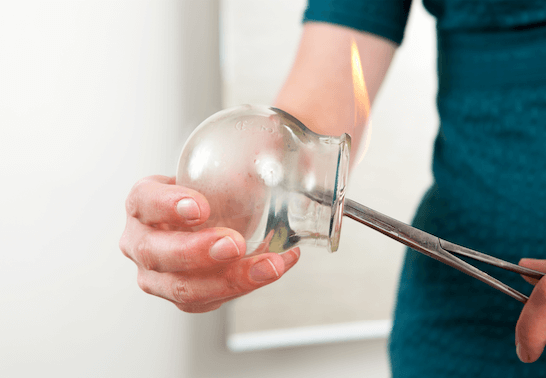
There are several ways that a practitioner can create the suction in the cups. One method involves swabbing rubbing alcohol onto the bottom of the cup, then lighting it and putting the cup immediately against the skin. Suction can also be created by placing an inverted cup over a small flame, or by using an alcohol-soaked cotton pad over an insulating material (like leather) to protect the skin, then lighting the pad and placing an empty cup over the flame to extinguish it. Flames are never used near the skin and are not lit throughout the process of cupping, but rather are a means to create the heat that causes the suction within the small cups.
Once the suction has occurred, the cups can be gently moved across the skin (often referred to as "gliding cupping). Medical massage oils are sometimes applied to improve movement of the glass cups along the skin. The suction in the cups causes the skin and superficial muscle layer to be lightly drawn into the cup. Cupping is much like the inverse of massage - rather than applying pressure to muscles, it uses gentle pressure to pull them upward. For most patients, this is a particularly relaxing and relieving sensation. Once suctioned, the cups are generally left in place for about ten minutes while the patient relaxes. This is similar to the practice of Tui Na, a traditional Chinese medicine massage technique that targets acupuncture points as well as painful body parts, and is well known to provide relief through pressure.
The side effects of cupping are fairly mild. Bruising should be expected, but skin should return to looking normal within 10 days. Other potential side effects include mild discomfort, skin infection, or burns. However, a trained health professional will apply an antibiotic ointment and bandage to prevent an infection.
The Philosophy Behind Pain and Cupping
“Where there’s stagnation, there will be pain. Remove the stagnation, and you remove the pain.”
The old Chinese medical maxim holds that pain results from the congestion, stagnation, and blockage of Qi, or vital energy, vital fluids, lymph, phlegm, and blood. If pain is the essence of disease, then suffering is a result of obstructed or irregular flow in the body. Chinese cupping is therefore a method of breaking up the blockage to restore the body’s natural flow of energy.
Cupping Combined With Acupuncture
Generally, cupping is combined with acupuncture in one treatment, but it can also be used alone. The suction and negative pressure provided by cupping can loosen muscles, encourage blood flow, and sedate the nervous system (which makes it an excellent treatment for high blood pressure). Cupping is used to relieve back and neck pains, stiff muscles, anxiety, fatigue, migraines, rheumatism, and even cellulite. For weight loss and cellulite treatments, oil is first applied to the skin, and then the cups are moved up and down the surrounding area.
Like acupuncture, cupping follows the lines of the meridians. There are five meridian lines on the back, and these are where the cups are usually placed. Using these points, cupping can help to align and relax qi, as well as target more specific maladies. By targeting the meridian channels, cupping strives to 'open' these channels - the paths through which life energy flows freely throughout the body, through all tissues and organs, thus providing a smoother and more free-flowing qi (life force). Cupping is one of the best deep-tissue therapies available. It is thought to affect tissues up to four inches deep from the external skin. Toxins can be released, blockages can be cleared, and veins and arteries can be refreshed within these four inches of affected materials. Even hands, wrists, legs, and ankles can be 'cupped,' thus applying the healing to specific organs that correlate with these points.
Other Benefits Of Chinese Cupping
This treatment is also valuable for the lungs, and can clear congestion from a common cold or help to control a person's asthma. In fact, respiratory conditions are one of the most common maladies that cupping is used to relieve.
Cupping’s detoxifying effect on skin and circulatory system is also significant, with a visible improvement in skin color after three to five treatments. Cupping removes toxins and improves blood flow through the veins and arteries. Especially useful for athletes is cupping’s potential to relieve muscle spasms.
Cupping also affects the digestive system. A few benefits include an improved metabolism, relief from constipation, a healthy appetite, and stronger digestion.
A 2015 report published in the Journal of Traditional and Complementary Medicine noted cupping as an effective alternative method of treating acne, pain, facial paralysis, cervical spondylosis, and herpes zoster.
As health practitioners and researchers continue to study the benefits of cupping, this traditional alternative care technique will gain further acceptance and wider practice across holistic healthcare centers in the U.S. as an effective treatment for a wide variety of ailments.
The Neo-Confucian and Taoist scholar Kunio Miura concluded in his research, which happens to be one of a handful of serious studies in the West on the contemporary Chinese Qi Gong practices: “The modern age of science and technology has brought changes in the understanding, description, and evaluation of the practices. Transcendence or immortality is out of the question. Spirit and spirits don’t play any significant role any more. Trance states are discouraged, since traditional ways of understanding and controlling them have been lost. Scientific man shies away from the supernatural.” (Miura, 357)
Based on the contemporary textual sources and his personal public observations of the practices, Miura defines the meditative Qi Gong to be the practices of scholars, and gymnastic or dynamic Qi Gong to be the practices of the working masses. Moreover, what puzzles Miura is that he cannot define whether the Qi Gong practices is science or religion. This characteristic of the traditional Western approach, namely the notion of the separation of dualism can be reconciled with what Maurice Freedman called the “rather tired intellectual world of the Great and Little traditions” 20 years ago. (Freedman, 37) In this formula, Confucianism (now Buddhism and Taoism) were “Great,” or learned culture, folk religions and practices were “Little,” or popular culture. From this standpoint, the traditional sinologists treated Chinese popular cultural practices in a dismissive spirit as gross forms of superstition resulting in a rather shapeless tradition. (Chan, 141) In effect, however, the “Great” and “Little” traditions are not oppositional but necessarily related, engaged, and overlapping in the same discourse and practice. The cultural practices, such as Qi Gong reveal a full range of Chinese cultural properties. Its substance always reflected the rich culture shared, not splintered, by all Chinese.
The separated, or elite approach in the understanding, description, and evaluation of the Qi Gong practices indeed reflect how the recent Chinese who were influenced by Marxist socialistic ideology, and the Western observers thought that the traditional Chinese cultural studies and practices have become. Mao Zedong 毛澤東 was inspired by Marxism (a Western thought) at age 25. He criticized sitting meditation for being too spiritual and not active enough, because “Human beings are active animals and they love to be active. Human beings are also rational animals and thus they need a reason for their activities.” (Mao, 39) It articulates a fundamental battle: the battle has been between spiritualism and rationalism, between idealism and materialism in China since 1911.
After the fall of Qing dynasty (1644-1911), there has been a hope for China to create a new synthesis of government that would transform China into a modern nation-state. This hope largely depends on the ideology of moving China away from its “feudal” past, and releasing China from its “economic backwards” into a new and advanced level of development without the ills of the capitalist system. Under such a social and political background, the meditative and gymnastic practices along with other traditional cultural practices are inevitably considered as superstitions and anti-science. In terms of Qi Gong, the battle was resolved by a shift to more moments in practice, stripping the traditional cosmological and spiritual agents, and the closed-door lineage-transmission to ways of physical treatment that involves more activities between physician and patient, and of general public entertaining activities.
In the 1950s, Liu Guizhen succeeded in curing his stomach ulcer by practicing his family long transmitted Qi Gong technique, which was in fact more of a meditative practice, and decided to publicize the method to the masses. He directed several medical clinics and treated a large number of patients with a success rate of over 80%. He was rewarded by the State Ministry of Health, and received formally by Chairman Mao in 1956, which echoes the traditional honor of having an audience with the emperor still deeply rooted in the mind of common people. In 1957, his breakthrough best seller “Experiences in Healing with Qi Gong,” which of course disassociated with the traditional cosmological and spiritual agents, was published. Unfortunately, he died rather early, at age 64, and there was hardly any evidence to prove that other practitioners performed his method as effectively. The dispute then is: can Qi Gong be a scientific or rational method divested from the complex notion of spiritual attainment or the ideas of magic power, and the lineage transmission?
There are no English words equivalent in meaning to the Chinese words shicheng 師承, which are commonly translated as “lineage transmission.” In the Chinese context, this expression refers to a set of assorted ideas: genealogy or the family history overlapped with lineage or the consanguineous tie; the parallels of fictive family kinship and kouzhuan xinshou 口傳心受, or the orally and esoterically body-to-body and mind-to-mind transmitted technique-bounded practices.
In the terms of Qi Gong practices, the lineage transmission indicates the non-broken genealogical line and the continuously oral-mind-transmitted esoteric techniques. It is indisputable that some of the earliest Chinese sages/philosophers conceiving the Way (ultimate truth) can be realized by practicing meditation, in Graham’s words: “training for the Way as the refining of the energizing fluids, the qi, by controlling one’s posture and breathing.” (Graham, 188) However, the techniques are described only briefly in Laozi, Zhuangzi, Mencius, and scattered in other early works. Although we are confronted with a great paucity of scholarship on the subject, and we have no sources or accounts on how meditation was put into practice as a means of realizing the Way, the writings of the great Taoist Ge Hong (283-363) demonstrated the fact that the usual sources for the notorious silence of the subject are a result of possibility of everything regarding to the actual practice only being orally and esoterically transmitted.
Ge Hong stated in his great philosophical summa Baopu zi: “In the hot summer, my grandfather always dived in the deep river, and stayed under the water until the end of the day, he then came out of the water, because he could halt his qi, and use the fetus breathing…such a technique was only orally transmitted by the True Man, and was never written on paper in words…” “People who are closed to themselves and thus trapped in depression have many sickness and short lives; people who express their emotions extremely also shorten their lives. Only those who harmonize themselves (through the meditative and gymnastic practices) can live long and healthily. However, without koujue 口訣, or the esoteric oral-transmission, no single one out of the ten thousand practitioners will not hurt or kill oneself (by improper practice) in the practices.” (Wang, 150)
Furthermore, he wrote: “Although the treatises on (the meditation and longevity techniques to attain) the Way were created in the School of Yellow Emperor 黃帝 and Laozi 老子, the original writings were rare. In the later centuries, those who were meddlesome and officious had fabricated enormous texts (on the techniques to attain the Way), so that volumes of books have been piled up like hills. Nevertheless, people of antiquity were serene and plain in writing; their treatises were without details, accuracy, and the origins of citations so that the writings were very difficult to comprehend…even the writings of sages such as Wenzi 文子, Zhuangzi, Guanling 關令, Yinxi 尹喜 were only literary. Although they emulated the Yellow Emperor and Laozi, their emulations were mystifying and deceitful. They only deduced the principles, never elucidated the practical instructions.” (Wang, 151)
Such statements still confirm the position of modern practitioners who are in a constant quandary about practice. For instance, one of the most widely cited healing technique texts—stated in the Yellow Emperor’s Inner Book—to heal the degenerative kidney illness or chronic low back pains: “Sitting down and facing the south at the hours between 3am-5am, one stills the mind, empties all thoughts, and concentrates on the breathing, and then halts and holds the breathing. One repeats it for seven times, each time swallows the breath deeply as if swallowing the hard substance. After seven times, one’s mouth will be full of saliva.” (Meng, 702)
It is impossible to see much rationale or practical instructions by simply reading the text. The unwritten texts in the practice traditionally are left to the understanding of the lineage-transmitted adept/master. Even at the level of studies and understanding, one ought to seek help from a traditional lineage-transmitted adept/master. The approach always begins with the idea that humankind is part of nature, whatever happens to the body or the mind, one should set about from the idea of harmonization between the macrocosms or the nature and the microcosms or the body. Thus, one may conclude the followings to support the text from the traditional cosmological perspective:
According to the Chinese cosmology and the Five Agents Theory, the cardinal direction south is associated with the “fire agent,” and the heart in the human body, while the cardinal north is associated with the “water agent,” and the kidneys. In relation to the theory of the ten heavenly stems, and the Chinese calendar calculation, during the hours between 3am to 5am, the “wood agent” becomes most active in time and space. According to He Tu, or the River Chart, seven as one of the primal numbers belongs to the south and stands for the “fire agent.” The conclusion thus is: the heart is nourished by the primal “fire qi” facing south, and the primal number seven; the heart is also produced by the primal “wood qi” at the given time zone.
One may conclude the following from the traditional medicine perspective as well:
The essential cause for weakening of kidneys (which contributes the symptoms such as chronic lower back pain, and the lack of energy and over all vitality) is the imbalanced or stagnant qi circulation between the heart and the kidneys. In the healthy human body, the “fire agent” of the heart circulates downward, while the “water agent” of the kidneys circulates upward. When the kidneys weaken, the kidney qi, or the “water agent” becomes stagnant and “cold.” Likewise, while the heart weakens, the heart qi, or the stagnant “fire agent” becomes “hot.” In order to heal the kidney problems, the heart qi or the “fire agent” and the kidney qi or the ”water agent” need to be harmonized across. By circulating, halting, and swallowing qi seven times as a set of repetitions to restore the down-flow of heart qi, and the up-flow of kidney qi, so that the hot energy from the heart will warm up the “cold water” of the kidneys. Likewise, the cold energy from the kidneys will reduce the “hot fire” of the heart.
According to Chinese medicine, between the hours of 3am to 5am, the lung channel becomes most active in human body. Since the lungs belong to the “metal agent,” according to the Five Agent Theory, “metal produces water.” While the lung channel is active, the “metal agent” of the lungs produce the primal “water agent,” and thus, the lungs nourish the kidneys. Simultaneously, the heart is nourished by the primal qi of south and the number of seven. If one performs the technique correctly, the saliva will be accumulated, which is a sign of strengthening the kidneys.
However, it becomes very crucial at the level of practice. According to the text, there are practically no descriptions on the body posture, breathing methods, and concentration techniques, which play the essential part in practice.
As a result of the above statements, two aspects regarding the lineage-transmitted adept/master should be strongly addressed: First, the adept/master usually has undertaken long and various trainings, he/she is capable to advise students with the specific detailed techniques to support the process of body, breath, and mind according to each student’s condition. Secondly, these technical supports are often impossible to reproduce in writings, or captured by camera, they must be provided by the master orally and personally. In other words, the adept/master has to rely on his/her experiences, and/or more importantly, his/her cultivations in qi to direct and help his/her students on body-to-body, mind-to-mind base, i.e. the adept/master has got the Qi, and the student/practitioner has not.
Hence, the issue of Qi, or the “magic power” rises. This magic power, or the Qi, is believed as matter, or concrete substance, which contributes certain difficulty in the Western understanding. Schwartz describes that it “comes to embrace properties which we would call psychic, emotional, spiritual, numinous, and even ‘mystic.’ It is precisely at this point that Western definitions of ‘matter’ and the physical which systematically exclude these properties from their definitions do not at all correspond to qi.” (Schwartz, 181)
Lineage transmission is based on the Confucian family kinship, its multifaceted rituals of ancestor worship, and the ancient method of oral transmission of knowledge. In all cultural practices, the formation of a fictive family kinship parallels with the consanguineous tie. Within the lineages the proper titles among the members follow the Chinese family structural designations, except the word shi 師 (teaching/master) is added at the beginning of the addresses: shizu 祖 (grandfather/master’s master, male/female), shifu 父 (father/master, male/female), shixiong 兄 (older brother/ fellow disciple), shidi 弟 (younger brother/ fellow disciple), shijie 姐 (older sister/ fellow disciple), shimei 妹 (younger sister/ fellow disciple), shibo 伯 (uncle/master’s older fellow disciple, male/female), shishu 叔 (uncle/ master’s younger fellow disciple, male/female etc.). In this fashion, the family structure, blood tie, and/or fictive kinship together keep the practice esoterically.
To a large extent, the development and transmission of knowledge and cultural practices relied upon the formation of family structure and unity in China. Consequently, the idea of lineages played the fundamental role in the transmission of Chinese cultural history and knowledge on the whole. In practice, the idea of lineage transmission seems to have been loosely articulated as a symbolic apparatus, modern scholars argue, it may even generate a sense of cultural chauvinism. From such Western standpoint, “lineage assertions are as wrong as they are strong.” (McRae, xix) Although the idea of lineage transmission has been reinterpreted, adapted, and subverted by the local traditions and by the elite traditions, but its fundamental intuition is never questioned. This intuition in all conceptual and operational aspects affords an understanding: the continuation of the lines of lineage transmission is the continuation of the Chinese cultural heritages and traditional knowledge and practices.
Original article and pictures take www.corespirit.com site
Premenstrual syndrome (PMS) is the most common disorder for women during their reproductive years, but it doesn’t have to be. Asian cultures have been using Traditional Chinese Medicine (TCM) to treat the hormonal imbalances that accompany menstrual cycle related symptoms for centuries. Chinese medicine calls this an imbalance of Qi in the reproductive and other related organs. Acupuncture and herbs can re-establish the flow of Qi and bring a balance to the body allowing the body to function optimally without hormone regulators such as a birth control pills.
Often the underlying problem with PMS is the hormonal imbalance. Estrogen levels are commonly too high in relation to progesterone levels.
The most common cause is our diets. Hormones are sensitive and overeating and obesity often lead to the conversion of androgens to estrogen by aromatase. High-fat diets, refined sugars and carbohydrates, processed foods and artificial sweeteners, dairy products and even commercially raised livestock are all a source of estrogen exposure. Limiting our exposure of so-called “artificial or xeno-estrogens” is not difficult. Eat a balanced healthy diet and choose hormone-free meat. Not surprising, exercise helps keep the balance, whereas alcohol and constipation both disrupt the balance.
Regulating hormone levels is a key component to combating PMS and Chinese herbs can help maintain a hormone balance through several methods. (See PMS Relief Herbs Pac) Many Chinese herbs have hormone enhancing properties. One such herb is Dang Gui. Several new studies have examined dang gui with a combination of herbs (also called herbal formulas).
We know herb formulas or a combination of herbs, are very effective and since dang gui is known as the “women’s ginseng”, it’s an indispensable herb for PMS symptoms. Although contradicting literature has been published on the phytoestrogen content in dang gui, it does have a plethora of well established and proven actions. In TCM it is a blood tonic and has to warm and dispersing actions. Numerous studies prove dang gui and other Chinese herbs nourish our blood. Monthly blood loss takes a toll on women over time, and a healthy diet, including herbs, is the fuel necessary to replenish the blood that is lost each month.
Many Chinese herbs contain high amounts of essential fatty acids which also help maintain our natural hormonal balance. Some do this by improving liver functions. The liver is viewed as part of the reproductive system in Chinese medicine. It’s imperative to help the liver regulate the production of prostaglandin hormones and strengthen the liver’s ability to synthesize proteins and fat. This facilitates the body’s ability to regulate itself. Bupleurum and Rehmannia are two traditional Chinese herbs which have clinically tested and proven liver tonifying properties. Strengthening liver functions is another way Chinese herbs helps an over-active uterus and therefore reduce PMS symptoms. Advil, Tylenol, and other NSAIDS only cover up your pain and can cause more harm to your liver function. Chinese herbs work at the root of the disharmony.
A recent study of 549 women in Australia documented results on the severity of PMS and the effectiveness of Chinese herbs to reduce the severity.[1] By restoring the imbalance in the reproductive system, herbal medicine can prevent monthly menstrual cramps, depression, PMS, and abdominal pain.
Maintaining a healthy hormone balance (part of homeostasis) is essential throughout life and will undoubtedly also help PMS symptoms. Be in control of your body and how it functions. Give yourself healthy foods and plant based medicine like Chinese herbs and you’ll naturally balance your body’s energy and restore your body’s natural hormone balance.
Note: “When the balance of Omega 3 and 6 fatty acids are off, it causes an inability of conversion from linoleic acid to GLA resulting in increasing the risk of over production of PGE2 and premenstrual pain and cramps.”
Original article and pictures take thecompleteherbalguide.com site
Chinese medicine uses many modalities of healing; acupuncture, herbal medicine, massage, and diet therapy make up the most commonly used and Chinese medicine cupping is gaining in popularity. Maybe some of you saw the photo a few years ago of Gwyneth Paltrow on the red carpet with a backless dress and cupping marks all up her spine? Sometimes it takes a little popular culture to remind us of ancient ways of healing!
The therapy of cupping has been used in China for thousands of years. At first it was applied using cattle horns or cross sections of bamboo. To create negative pressure inside the horn or bamboo these ancient ‘cups’ where boiled in water or fire was ignited to expel the air and suck the cups onto the skin. These cups were used mostly to draw out pus and blood in the treatment of boils. Cupping was originally used as an auxiliary method in traditional Chinese surgery. Later it was found to be useful in treating other diseases and developed into a special therapeutic method.
The earliest record of cupping is in the Bo Shu (an ancient book written on silk), which was discovered in a tomb of the Han Dynasty. Several other ancient texts mention Chinese medicine cupping. Several centuries later another famous medical classic, Su Sen Liang Fang, recorded an effective cure for chronic cough and the successful treatment of poisonous snake bites using cupping therapy.
Through several thousand years of accumulated clinical experience, the clinical applications of cupping have become increasingly wide. Now Chinese medicine cupping is used to treat arthritic symptoms, asthma, the common cold, chronic cough, indigestion problems and some skin conditions.
There is a saying in China: “Acupuncture and cupping, more than half of the ills cured.” Zhao Xue Ming, a doctor practicing more than 200 years ago, compiled a book entitled Ben Cong Gang Mu She Yi, in which he describes in detail the history and origin of different kinds of cupping and cup shapes, functions and applications.
In mainland China the development of cupping therapy has been rapid. In the 1950’s the clinical efficacy of cupping was confirmed by the co-research of China and acupuncturists from the former Soviet Union, and was established as an official therapeutic practice in hospitals all over China.
Today, as more people seek alternative therapies to deal with their health problems, the use of traditional Chinese medicine, including cupping is increasing. Much of the cupping equipment and methods used today are exactly the same as they were in ancient times. Some electronic or mechanized pumps have been invented, and suction cups introduced, but to a great extent the majority of people practicing cupping today still use horn, bamboo or glass cups. One reason that cupping techniques remain the same as in ancient times is due to the fact that, with the exception of a handful of acupuncture practitioners, cupping is generally practiced in rural area where no or very little modern medicine is available.
Cupping affects the flow of Qi and blood. It helps draw out and eliminate pathogenic factors such as wind, cold, damp and heat. Cupping also moves Qi and Blood and opens the pores of the skin, thus precipitating the removal of pathogens through the skin itself.
My first experience of cupping was when I had a bad cold and my acupuncturist applied cups to my back. First my back was rubbed with fragrant oil and, as I lay face down, the cups were applied. I could feel their edges digging into my flesh and then a gentle warmth and release as my skin was pulled up and away from my body. Once the cups were firmly in place and sucking up my skin, the practitioner moved them up and down my back. (This is called walking cups.) I was left to rest with the cups on my back. Once I got up from the table I felt much improved, the heaviness in my chest was gone and I had bright purple suction cup marks along my back, not unlike Gwyneth Paltrow in the photo of her – post cupping. The purple marks didn’t hurt or bother me at all. They disappeared after a couple days along with my cold. Cupping provided relief from my cough and effective treatment of my cold.
Original article and pictures take www.corespirit.com site
The Healing Warmth of Moxibustion Moxibustion is an effective treatment for pain and many other health problems. Shutterstock/Monika Wisniewska
For ancient doctors, the guiding principle was balance.
Naturally, a patient who is cold and weak needs warmth and strength. In traditional Chinese medicine, the main remedy for this affliction is called moxibustion or moxa.
According to Dr. Tracy Stuardi, a licensed acupuncturist at the Doorway to Wellness clinic in Austin, Texas, moxa gives deep, penetrating heat to resolve underlying cold.
“The cold will settle in the uterus or the lower abdomen or the GI tract. Often time you can feel when you palpate areas where they’re cold where they shouldn’t be,” she said. “Moxa is an easy way to bring heat to the area.”
The name “moxa” is an anglicized version of the Japanese word “mogusa,” which means “burning herbs.” The practice involves burning medicinal cigars and cones on or near the body.
Moxa is said to have originated from northern China at least 3,000 years ago, and burned on acupuncture points long before the advent of needles. Today moxa is used to treat a wide range of issues, such as chronic digestive disturbance, menstrual problems, reproductive concerns, and advanced illnesses such as tuberculosis, Lyme disease, and cancer.
“It’s very powerful for pain,” said Stuardi. “Many patients we see come in with a lot of pain and sometimes the needles alone aren’t enough.”
Stuardi is unique in that many Western practitioners of Chinese medicine have shied away from moxa, preferring instead to focus attention on acupuncture.
“It’s a shame that more practitioners are not doing it,” she said. “I think a lot of people are intimidated. And it takes more time.”
In China, Japan, and Korea, moxa plays a major role in treatment, but in the United States the technique has been slow to catch on. Moxa is taught in Chinese medicine schools, but many American acupuncturists abandon this modality once they graduate.
According to Stuardi, the biggest issue with moxa is the smell. Moxibustion treatment creates an aromatic smoke which many people mistake for marijuana.
“People are like, ‘oh, what is that smell? Is that okay? Is it supposed to smell like that?”‘ she said. “The bottom line is that it’s a very effective technique.”
Small moxa cones are placed on acupuncture points along the spine and burned for warmth and strength. Shutterstock/treasure dragon
Primary Medicine
Moxa has not been researched as much as acupuncture, but the available literature shows positive effects on the blood, immunity, and the regeneration of tissue. A 1998 study published in the Journal of the American Medical Association found that 75 percent of pregnant women had their breech fetuses turn to the normal position with moxa burned on an acupuncture point located on the pinky toe.
While moxa may be considered a minor part of Chinese medicine in the West, ancient doctors held it in high regard. In the Nei Jing—a fundamental text in Chinese medicine—moxa is said to “do what the needle cannot.”
Some modern practitioners are taking this ancient notion to heart. Daniel Silver, a licensed acupuncturist, and adjunct professor at the National College of Natural Medicine in Portland, Oregon, described the complex case of a woman he recently treated with moxibustion. She had been in multiple car accidents, and had received acupuncture from various practitioners for months at a time, but only experienced minor improvements.
With just one session of moxa, however, she reported “life changing” effects.
“I’ve seen so many great results with patients,” said Silver. “I’m really convinced on a daily basis about the benefits of this, and hope more and more people can find it.”
Silver says that what keeps many American acupuncturists from using moxa is that they’re too worried about the possibility of accidentally burning a patient. He urges practitioners to overcome this fear with practice.
“It’s good for people to have a healthy respect and concern for it,” he said. “Part of the problem is that in the West we tend to think of medicine in a very intellectual way, and this is very much a hands on skill in which you need to develop proficiency so that it can be performed in a therapeutic manner.”
Magical Mugwort
Moxa is made from a prolific weed called mugwort (Artemisia vulgaris), which is often prescribed in herbal medicine for uterine complaints, such as labor pain, menstrual cramps, and heavy bleeding, as well as digestive, hormonal, and circulatory disorders.
For use in moxibustion, mugwort is processed into a spongy material called moxa wool.
A moxa burner is filled with burning moxa wool, and held about an inch over the body. Shutterstock/hjschneider
According to Lorraine Wilcox, author of two books on moxibustion for clinical use, ancient Chinese doctors choose mugwort because it had all the right qualities: it smolders easily, and produces a steady, slow burning heat.
On a Nov 17, 2014 episode of the Yin Yang podcast, an audio program for acupuncturists, Wilcox said one of the main reasons mugwort was chosen was for its magical properties.
“In really old books, mugwort is used against evil qi or ghosts or toxic things like snakes and scorpions and stuff like that,” she said. “So it has a supernatural aspect, as well as the creepy crawly things don’t much like it.”
Mugwort smoke has a calming effect on the nervous system. Once patients get over the funny smell, they may actually enjoy it.
“Some patients drift off into a nice euphoric rest during their treatment,” said Stuardi.
Moxa can benefit anyone, but there are times when it is not appropriate, such as with fever, infection, eczema, and other signs of excess heat. Points on the abdomen and lower back should be avoided in the early stages of pregnancy.
Direct and Indirect
Moxa techniques are divided into two categories: direct and indirect. The direct method, which requires a skilled practitioner, burns directly on the skin. With the indirect method, a hot moxa ember is held about an inch away from the body.
The indirect method is easy to learn, and often times a practitioner may give the patient a moxa cigar and an acupuncture point to hold it over to continue treatment at home.
Hold the heat above the prescribed point, and pull it away when it gets too hot. Give the area a few seconds to cool, then resume treatment.
Stuardi instructs patients to go past the superficial feeling of warmth until the heat penetrates deep into the tissue. “Once you’ve felt the heat penetrate you’ll know you’ve done a good job and you can extinguish the stick,” she said. A session usually lasts between 5 and 10 minutes.
Moxa supplies are available in Chinatown shops, acupuncture schools, or over the Internet, and come in a variety of shapes and sizes: from cigarette butt-sized stumps with an adhesive end, to loose moxa wool.
One popular form is a charcoal-based smokeless moxa stick for those who want to avoid the smoke and smell. However, Stuardi believes these are less effective.
“I try never to use smokeless, unless for some reason that’s the only thing available,” she said.
For people with asthma, allergies, or suspicious neighbors, Silver recommends high grade Japanese moxa, such as Ibuki Gold Mountain.
“It has very, very little smell,” said Silver. “Most of the smell you get from this kind of moxa is from the incense you use to light it. Many people can tolerate it.”
Original article and pictures take m.theepochtimes.com site