пятница, 1 апреля 2016 г.

The Concept of Traditional Chinese Medicine

The Concept of Traditional Chinese Medicine


In the west, we tend to think of “medicine” as a way of dealing with illness and disease. In contrast, Traditional Chinese Medicine (TCM) focuses on achieving health and well-being through the cultivation of harmony within our lives.


TCM is based on the Chinese concept of “Qi” (pronounced “chee” and usually translated as “vital energy”) and the theory of “yin and yang” (the harmony of all the opposite elements and forces that make up existence).


It believes that…


  • Harmony brings health, wellbeing, and sustainability.
  • Disharmony leads to illness, disease, and collapse.

What is the TCM perspective?


In the simplest terms possible, TCM is a way of looking at ourselves and our world that sees everything as a whole and considers everything in context. In TCM this perspective is called “taking whole.”


This perspective is applied to everything affecting our health and wellbeing; from our diet, exercise, and how we handle stress; to how we interact with our family and friends, our community, and our environment.


Thus TCM not only identifies and treats illness and prevents disease but, just as importantly, optimizes health, wellbeing, and sustainability in our lives and in our world.


How is it related to “Oriental Medicine”? Systems of Oriental Medicine


TCM is the official form of Chinese medicine practiced in the People’s Republic of China, and is one of the many systems of medicine that can be classified as “Oriental medicine.” Oriental medicine is a term that encompasses diverse medical theories and applications developed and practiced in the Far East, including China, Korea, Japan, Taiwan, and Vietnam.


TCM is probably the most frequently encountered and most familiar of the Asian medical systems, and it has an extensive body of literature and research supporting it.


Today TCM is practiced throughout the world, with about 14,000 practitioners in the United States alone. As more and more people explore new ways of complementing their existing healthcare, it’s not unlikely that you know someone who uses this ancient Asian system. For these reasons, TCM is an excellent starting point to learn more about complementary medical systems from Asia.


Where does TCM come from?


TCM is a direct descendent of one of the oldest and continuously practiced systems of medicine in the world, and can trace its roots back 2500 years. Since its inception, Chinese medicine has evolved and developed into a very sophisticated and rational system of medicine influencing and being influenced by the many cultures and systems of medicine it has come into contact with along the way.


Today Chinese medicine continues to develop in new and exciting ways and is utilized by millions of people around the world. It is truly a world-class system of medicine!


References


Nisbett, Richard. The Geography of Thought; How Asians and Westerners Think Differently… and Why. Simon and Schuster, New York. 2003.


Schirokauer, Conrad.. A Brief History of Chinese Civilization. Orlando, FL.: Harcourt Brace. 1991


Yu Huan, Zhang., Ross, Ken. Who Can Ride the Dragon: An Exploration of the Cultural Roots ofTraditional Chinese Medicine. Brookline, MA., Paradigm Publications. 1995


Expert Contributor: Christopher Hafner, L.Ac.


Original article and pictures take thecompleteherbalguide.com site

вторник, 22 марта 2016 г.

The Body Code As An Heart Healing Technique

The Body Code As An Heart Healing Technique

The Body Code is a state of the art healing technique. It was developed over several years by a holistic chiropractor, Dr. Bradley Nelson, who teaches that true health simply means being balanced in six different ways:


Energies: Identifing and removing damaging energies that can become trapped in the body during stressful emotional events.


Circuitry:Balancing the energy systems including the chakras, the meridians, and the energy circuits of the organs and glands.


Toxicity:The Body Code can identify and address toxic agents that don’t show up on medical tests as well as those that do.


Pathogens:Destructive and often elusive infections can be easily identified along with any necessary remedies to rid the body of them.


Structural:Imbalance in the bones, organs, connective tissue, muscles and nerves can be treated non-invasively.


Nutritional:Nutrient deficiency as well as imbalances like dehydration, magnetic field deficiency or a need for a healing food or herb.


How Does it Work?


The Body Code is so effective because it allows us to find specific problems and simply remove them. The Body Code is a tool to be used to tap into our subconscious mind to determine what imbalances need to be corrected.


Like a computer the subconscious mind will record every belief, thought, word or action that has been recorded throughout our lifetime by our input devices. What we see, hear, taste, speak and feel from the moment of conception until now is recorded on this “hard-drive” within our mind. Our sub-conscious mind programs itself based on the environment in which we receive the input. This is why it is so important to understand that our culture, religion, family history, social environment and community are so important in understanding who and what we have become. Once the old programs are released, we can input and reprogram our true “heart desires”.


Using kinesiology we can enter the sub-conscious through specific wording that will elicit a “yes” or “no” response. The muscles of the body will weaken if the answer is “no” and the muscles of the body will strengthen if the answer is “yes”. It is possible to tap into the “programming” of the body to determine if there is an imbalance which can be corrected to change our current life experience to one we want and need.


How a Body Code Session is Done:


Either in person or via proxy (over the phone, Skype or by email), the practitioner connects with the client’s energetic field and subconscious. Using Body Code charts and simple kinesiology (muscle testing) with binary (yes or no) questions, imbalances are identified and released.


The body has a special ability to set aside its own needs to serve another, which is why the practitioner can use proxy muscle testing. We are all made of and exist in the same sea of energy, therefore, we can connect via this energy wherever we are. The intention of the practitioner during a session is to serve the highest good of the client.


The energetic body and subconscious mind are like a lake. Beneath the surface are hidden Trapped Emotions and other imbalances that can contribute to poor health. When a Trapped Emotion is identified and recognized by the conscious mind, it rises to the surface of the body and the energy is concentrated along the governing meridian of the body. The governing meridian runs from the upper lip, up over the head and down the spine to the tail-bone. To release the trapped emotion the practitioner rolls a magnet down the spine or governing meridian, usually three times. Given that the body is made of electromagnetic energy, the magnet literally pulls the trapped emotion away from the body.


Once a particular trapped emotion is released, that’s it! It’s gone forever!


Original article and pictures take www.corespirit.com site

пятница, 18 марта 2016 г.

The Ayurvedic Concept of Imbalance

The Ayurvedic Concept of Imbalance

Unless you are a saint, you will go out of balance and become sick from time to time. Occasional sickness is inevitable for a mortal; continuously perfect health does not exist on our planet. Every body-mind-spirit has some weak point, somewhere.


Prajnaparadha - literally, "an offense against wisdom" – happens whenever one part of you insists on an action that is detrimental to the rest of you. It happens when you know deep inside that something is not right for your body-mind-spirit, but you obstinately go ahead and do it anyway, ignoring Nature's warnings. Any part of you can perform prajnaparadha from the cancerous cell that rebels against the organism's wisdom, to the mind that insists on its idiosyncratic version of reality.


Ayurvedists who survey today's world find prajnaparadha everywhere they look, and are not surprised to discover gargantuan imbalances emerging as rampant disease. My mentor was very big on the real reality. "It is always better to live with reality," he would say, "because otherwise, without fail, reality will come to live with you."


While you are a child you live in a world of seemingly unlimited possibilities. As you become an adult, limitations set in, and you learn that you have to live within your limits if you want to enjoy unimpeded flow. Life without limits perverts your reality; it sours your sweetness, or turns it bitter. Sickness is "reality coming to live with you," which is why it is all right to be sick. Sickness is Nature's tap on your shoulder, her reminder to you that you have strayed from the path. When you open yourself to her again, and allow her to work within you, she will reawaken your body's innate healing abilities to set things right. Until you return to that path, Nature will go on reminding you, for as long as it takes - or until your viability as a body-mind-spirit complex expires.


finding balance

How well your natural healing mechanisms will work in any specific instance depends mainly on two things: how carefully you follow the appropriate regimen (without being stiff or humorless about it), and how much vitality your system retains. After all, everyone has to die of something.


When you are sick, you should ask yourself practical questions, such as how to change your ways so that your disease will disappear.


Do not, however, fall into the trap of trying to figure out what you did to bring this on yourself.


There is little to be gained by getting stuck on some simplistic cause-effect relationship when you are trying to extricate yourself from the jaws of a disease. You will do better to focus on regaining your health instead of trying to conduct an autopsy on how you went wrong.


Because it is always best to detect and correct imbalances while they are still incubating, it is useful to learn about your own physical, energetic, mental, and emotional "blind spots" and then try to keep a regular eye on them. You should try to pay attention to yourself when you are feeling fine, so that you will quickly take notice when you are not feeling right. The earlier you can detect that something is wrong with you, even if it is not detectable on any of the standard diagnostic tests, the sooner you can treat yourself and prevent the disease from needing to manifest itself fully.


This also applies of course, to everyone you are parenting. It is good to keep a watch on your children, by such means as their pulses, voices, or food habits, and try to nip any problems in the bud. You will find it easier to recognize blind spots if you can also identify strengths.


Perhaps the most striking of the many differences between Ayurveda and Western medicine is that while the latter focuses on disease to the extent that it defines health as its absence, Ayurveda focuses on health. Ayurvedic diagnosis, therefore, begins with what is right with you: how well nourished, toned, and "excellent" your tissues are, and how effective your channels flow.


Reprinted with permission from Ayurveda For Women; A Guide To Vitality and Health by Dr. Robert E. Svoboda, Healing Arts Press. ©2000 All Rights Reserved.


About The Author


Dr. Robert Svoboda


Dr. Robert Svoboda, BAMS, is the first Westerner ever to graduate from a college of Ayurveda and be licensed to practice Ayurveda in India. During and after his formal Ayurvedic training he was tutored in Ayurveda, Yoga, Jyotish, Tantra and other forms of classical Indian lore by his mentor, the Aghori Vimalananda. The author of more than a dozen books, he lived in India for more than a decade, after which he has continued to spend much of each year there and in other lands.


You May Also Like...


Yoga and Ayurveda are two interrelated branches of the same great tree of Vedic knowledge that encompasses all of human life and the entire universe. In this regard, it is important to understand the respective roles of Ayurveda and Yoga in the Vedic system. Continue Reading >


How can Ayurveda support your Yogic lifestyle? Perhaps you are just wandering into the world of Yoga, or perhaps you are deeply entrenched in Yoga. Wherever you are on the journey, Ayurveda has much to offer you. Ayurveda, translated as the “knowledge of life”, is much more than an “alternative” medicine system. Continue Reading >


As complimentary Vedic sciences, Ayurveda and Yoga originated from the same source and share a common history, language and cultural foundation. Integrating Ayurveda into your practice can bring about a greater sense of balance, harmony, self-awareness and health. Continue Reading >


Original article and pictures take www.banyanbotanicals.com site

вторник, 1 марта 2016 г.

The Ancient Ayurvedic Writings

The Ancient Ayurvedic Writings

Charaka Samhita


The Charaka Samhita is believed to have arisen around 400-200 BCE. It is felt to be one of the oldest and the most important ancient authoritative writings on Ayurveda. It is not known who this person was or, if indeed, this represents the work of a “school of thought.” It could have been from a group of scholars or followers of a man known as Charaka or an original composition from a single person named Charaka. This work is sometimes considered a redaction of an older and more voluminous work, Agnivesha Samhita (46,000 verses), which is no longer extant. Dridhabala, living about 400 AD, is believed to have filled in many verses of missing text (perhaps up to 20%) in the Chikitsasthana and elsewhere, which disappeared over time.


The language of Charaka is Sanskrit and its style is poetry, with meter and melody. Poetry was known to serve as a memory aid. For example, Charaka contains over 8,400 metrical verses, which are often committed to memory, in toto, by modern medical students of Ayurveda.

It presents most of the theoretical edifice of Ayurveda and concentrates on the branch of Ayurveda called kayachikitsa (internal medicine). This is largely the theory of the internal fire–of digestion–or internal medicine, in modern terms. Charaka never discusses the sub-types of pitta and kapha, but does list and describe the 5 sub-types of vata.


Seen from a greater perspective, this work seems to represent a certain value of consciousness that is different from other works. It gives more discussion about the notion that life is fundamentally a field of intelligence and pure knowledge. This field is self-aware; it is the Knower as well as the object of perception, and for Charaka this is part of what is to be treated by the physician.


The P.V. Sharma translation comes in four volumes, two of original text and two of commentary about the original work. Sharma’s English version is said to be a scholarly and relatively faithful work. It has numerous appendices and an extensive index. The B. Dash / R.K. Sharma version lacks these features but does have extensive commentary incorporated in with the original text. All three translators have excellent academic or/and clinical credentials supporting their works.


Sushruta Samhita


The Sushruta Samhita presents the field of Ayurvedic surgery (shalya). This branch of medicine arose in part from the exigencies of dealing with the effects of war. This work also is said to be a redaction of oral material passed down verbally from generation to generation. It is thought to have arisen about the same time period as the Charaka Samhita, slightly after or before it according to different authorities. Its style is both prose and poetry with poetry being the greater portion.


The Sushruta Samhita, while dealing with the practice and theory of surgery, is an important source of Ayurvedic aphorisms. For example, the most comprehensive and frequently quoted definition of health is from Sushruta. This work is unique in that it discusses blood in terms of the fourth doshic principle. This work is the first to enumerate and discuss the pitta sub-doshas and the marmas. With its emphasis on pitta, surgery, and blood, this work best represents the transformational value of life.


This work, also originally written in Sanskrit, is now available in English with Devanagari. Bhishagratna’s translation is English and Sanskrit. P.V. Sharma has recently written a translation with both the Sanskrit/Devanagari and English that includes Dallana’s commentary. Dallana has been regarded as the most influential commentator on Sushruta’s work.


Ashtanga Hridayam and Ashtanga Sangraha


Ashtanga Sangraha and Ashtanga Hridayam are the work of a person named Vagbhata. There are two works by a person or persons with this name. The Ashtanga Sangraha is nearly 40% greater in size (by verse count) and is primarily poetry with prose. The Hridayam (about 7800 verses) is written in prose and seems to have a slightly different organization of material than the former. Both works have been dated about the same time and are thought to date after the Charaka and Sushruta Samhitas (400 CE).


The exposition is relatively straightforward and also deals primarily with kayachikitsa. In this work, we see the kapha sub-doshas are listed and described for the first time, completing our modern edifice of vata, pitta, and kapha with their five sub-types. Its emphasis on treating the physiology of the body and suggestions for therapeutic use of metals and minerals means the perspective of the treatise represents the gross, material value of life more than its counterparts Charaka and Sushruta. While Charaka has entire chapters dealing with the Self, these works merely mention that the body is the home for the Self without any elaboration.


Srikantha Murthy’s translation includes the Sanskrit/Devanagari for those who want to delve into the original text. S. Murthy has translated many of the ancient Ayurvedic writings into English, for which we are indebted. He has weighty credentials and brings them to bear in this work.


The Lesser Three Classics of Ayurveda


Sharngadhara Samhita


The Sharngadhara Samhita is a concise exposition of Ayurvedic principles. Its author, Sharngadhara, has offered his work as a digested version of Ayurvedic knowledge, deliberately omitting much detail because the works of The Great Three were already widely known. This treatise is thought to have originated in the 15th century AD. The Sharngadhara Samhita is prized for its enumeration and description of numerous pharmacological formulations used in panchakarma and contains the first textual elaboration of diagnosis by means of the pulse. Its subject matter is again the field of kayachikitsa. This work is available in Sanskrit/Devanagari and English translation by Srikantha Murthy.


Bhava Prakasha is just now available in English translation. It is the most recent of the classical texts, written in the 16th century. It is a well-organized and compact re-presentation of the earlier classics. There are about 10,268 verses of varying meters. It deals with kayachikitsa generally and has a large section entitled Nighantu, which gives the characteristics of many foods, plants, and minerals. Many of it sutras are direct quotes from earlier writers. Sri Kantha Murthy again does this Sanskrit/Devanagari and English translation.


Madhava Nidanam, available here in Sanskrit/Devanagari and English translation by Srikantha Murthy, deals with the classification of diseases in Ayurveda. Its taxonomy is slightly different at times from those given by Charaka, Sushruta, and Vagbhata, while for the greater part its verses are seemingly direct quotes from them. This work is dated around 700 AD and is prized for covering a wide range of diseases in the fields of bala (children and women’s disorders), shalya, damstra (toxicology), shalakya (ear, nose and throat), and kayachikitsa. While this treatise gives detailed description of disease etiology (disease doctrines), prodroma and cardinal signs and symptoms, it does not give explanation or suggestions for chikitsa (treatment).


Original article and pictures take www.corespirit.com site

четверг, 25 февраля 2016 г.

The Ancient Art and Science of pranic Healing

The Ancient Art and Science of pranic Healing

Prana is a Sanskrit word literally meaning “life-force” – the invisible bio-energy or vital energy that keeps the body alive and maintains a state of good health. The Japanese call this subtle energy Ki, the Chinese Chi, while the Greeks refer to it as Pneuma. In Polynesian it is known as Mana, and in Hebrew, Ruah – meaning “Breath of Life.”


Pranic Healing is a form of energy healing which makes use of Prana, or vital energy, in the treatment of a wide variety of ailments. As an art and science, Pranic Healing was widely practiced in ancient civilizations in China, Egypt and India. In Pranic Healing, cure is effected by simply removing diseased energies from the patient’s invisible energy body and by transferring fresh vital energy (Prana) to the affected areas with the use of the hands. Using a scientific “no-touch” methodology, Pranic Healing can prevent, alleviate, and heal a whole spectrum of physical, emotional, and mental ailments. Because the methods are simple and fairly easy to understand, anyone can learn and apply pranic healing in no time at all.


Scientific evidence provides tangible proof of the existence of the energy body and its relation to the health and well-being of the physical body. Based on the scientific experiments conducted by the eminent Russian scientist, Semyon Kirlian, photographs taken of humans, animals and plants through an ultrasensitive camera process showed a colorful, radiant energy field surrounding the physical body. This energy field, or aura, interpenetrates the visible physical body, extending about 4 to 5 inches from the skin’s surface. Experiments in Kirlian photography have also revealed that diseased energies appear first in the energy body before manifesting as a physical ailment. Further experiments have produced dramatic evidence that a person’s thoughts and emotions substantially affect the color, brilliance, and vitality of his energy body.


Simple physical disorders like headaches, toothaches, coughs, sore throats, fever, stomach aches, diarrhea, dysmenorrhea, muscle pain, sprains, and minor burns;


Severe ailments, tuberculosis, hypertension, heart problems, hepatitis, myomas, cysts, migraine, arthritis, and epilepsy;


Emotional and mental disorders like stress, tension, anxiety, depression, phobias, manias, paranoia, schizophrenia, and other related ailments.


Pranic Healing is not intended to replace modern medicine. Rather, this ancient healing methodology is intended to complement conventional medical practices as well as other alternative healing methods.


The teacher who has reintroduced the ancient science and art of pranic healing to the world is Master Choa Kok Sui. A Chinese-Filipino scientist, educator, and philanthropist, he has written three practical manuals on pranic healing The Ancient Science and Art of Pranic Healing (1987), The Ancient Science and Art of Pranic Psychotherapy (1989), and Advanced Pranic Healing (1992). His works are the distillation of over 20 years of studies and experimentation, and are published in over 12 languages around the world.


From his writings, the following Pranic Healing Courses were developed: a) Basic Pranic Healing Course (for treating simple ailments); b) Advanced Pranic Healing Course (the use of color prana and advanced healing techniques for treating severe ailments); and, c) Pranic Psychotherapy Course (for treating psychological and psychiatric ailments using advanced pranic healing techniques).


As vehicles for disseminating his teachings, Master Choa KoK Sui founded the Institute for Inner Studies, Inc. and the World Pranic Healing Foundation, Inc.


Original article and pictures take www.corespirit.com site

пятница, 12 февраля 2016 г.

The 55 Best Herbal Remedies Known To Man

The 55 Best Herbal Remedies Known To Man

Make sure you Like SHTFPreparedness on Facebook or Follow us on Pinterest to be updated every time we post great articles on Prepping, Homesteading, Survival, DIY and other topics!


The 55 Best Herbal Remedies Known To Man - While some people may dismiss herbal remedies as quackery, the use of botanicals is well rooted in medical practice. Ancient doctors methodically collected information about herbs and developed well-defined pharmacopoeias to treat a variety of ailments. More than a quarter of all drugs used today contain active ingredients derived from those same ancient plants.

While some people may dismiss herbal remedies as quackery, the use of botanicals is well rooted in medical practice. Ancient doctors methodically collected information about herbs and developed well-defined pharmacopoeias to treat a variety of ailments.


More than a quarter of all drugs used today contain active ingredients derived from those same ancient plants. These 55 herbal remedies can not only save you a lot on your health care bill but in a survival situation give you the upper hand in your health and in bartering.


It wasn’t long ago that all we had was herbal remedies to help us in sickness. So why not get back to the old days and see what remedies you can use now and learn some new ones.


I like number (34) Horse Chestnut for Varicose Veins:

“Mainstream medicine offers only support hose and surgery,” says Blumenthal, “but standardized horse chestnut seed extract has shown efficacy in most clinical trials.” At the University of Heidelberg, Germany, 240 sufferers of newly visible varicose veins were treated with compression stockings or horse chestnut (50 mg aescin twice a day). After 12 weeks, both groups reported equal relief. Off the tree, horse chestnuts are poisonous, but commercial extracts are detoxified and safe.


Original article and pictures take www.shtfpreparedness.com site

среда, 3 февраля 2016 г.

Tea for Alzheimer’s Lowers Your Risk of Alzheimer’s Up to 86%, Scientists Say

Tea for Alzheimer’s Lowers Your Risk of Alzheimer’s Up to 86%, Scientists Say
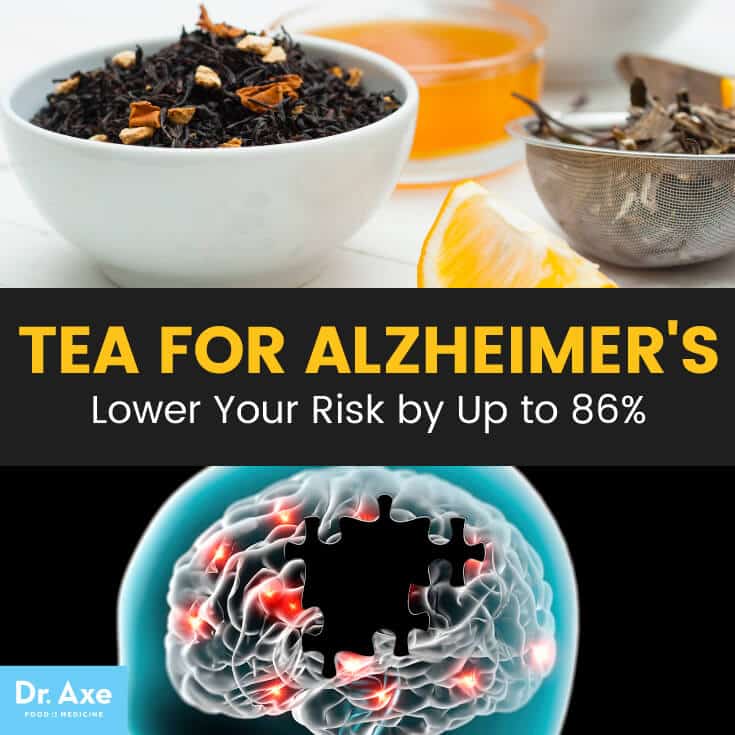
Tea for Alzheimer's - Dr. Axe

In a breakthrough study, scientists found evidence that using tea for Alzheimer’s could drastically lower your risk of developing the condition. It’s true, sipping tea could help ward off Alzheimer’s disease, according to a 2017 study out of the National University of Singapore says. (1)


Most of us don’t give a second thought to brewing a morning matcha green tea or tapping into chamomile benefits to wind down at night. But according to researchers, the beverage doesn’t just taste good, it’s good for your brain. More specifically, tea for Alzheimer’s prevention could be an inexpensive, drug-free way to lower your Alzheimer’s risk.


Tea for Alzheimer’s Prevention Looks Promising


The tea for Alzheimer’s study followed more than 950 adults aged 55 years or older and studied their tea drinking habits from 2003 to 2005. Then, from 2006 to 2010, researchers followed up with the men and women and assessed their cognitive function, using the same standards each time.


The results? Those people who regularly drank tea reduced their risk of neurocognitive disorders by 50 percent. And, even more impressively, tea’s protective benefits were particularly effective for people genetically predisposed to Alzheimer’s — this group reduced their risk of cognitive impairment by as much as 86 percent. Turns out, tea could be a viable Alzheimer’s natural treatment.


According to the researchers, the type of tea for Alzheimer’s risk reduction doesn’t matter either, as long as it’s brewed from tea leaves and drank consistently.


From the sound of it, you might think leaky gut only affects the digestive system, but in reality it can affect more. Because Leaky Gut is so common, and such an enigma, I’m offering a free webinar on all things leaky gut. Click here to learn more about the webinar.


How Tea Impacts the Brain


While tea for Alzheimer’s is exciting news, it’s just the latest proof that tea actually works to protect your brain. What makes tea so special is some of the compounds found in it, like catechins and theaflavins. These ingredients are packed with antioxidants and anti-inflammatory properties that might protect the brain from aging.


A 2013 study found that the theanine and caffeine in tea helped drinkers perform better at work. It also increased creativity and alertness. (2) Caffeine pairs up well with L-theanine, too, a relaxation-promoting amino acid. In fact, the combo works in tea to reduce mental fatigue while increasing alertness and memory. (3)


And in 2012, researchers discovered that EGCG, a chemical found in green tea, actually improves memory. EGCG actually boosts production of neural progenitor cells, which the brain can then adapt to its own needs. When scientists tested the theory on lab mice, they found EGCG helped the rodents recognize objects while improving spatial memory. (4) Amazing side note? Thanks to EGCG, green tea makes the cancer-fighting foods list, too.


Better memory, increased alertness, reduced mental fatigue and it’s all-natural? Are you ready to become a tea drinker yet?


Best Ways to Enjoy Tea


If you’re ready to add more tea into your life, here’s how to do it right.


Use real tea leaves. While tea bags are super convenient, the tea for Alzheimer’s study specified that it’s the tea leaves that have all the healing benefits. While tea bags aren’t bad for your health, you will be missing out on all of the leafy goodness tea has to offer. Luckily, these days you can buy convenient tea pots that trap the leaves, making brewing tea as simple as instant coffee. Whether you’re looking for black tea benefits or prefer green tea or another type, it’s easier than ever to find loose leaf, organic teas.


Best ways to enjoy tea - Dr. Axe

Don’t brew too long. Keep your eye on the clock when making tea. Green tea doesn’t need to steep very long, just 2 to 3 minutes. Any longer and the tea will release tannins, leaving a bitter taste in your drink. For other types of tea, 3 to 5 minutes is ideal.


Beware of what you’re adding. Like most foods and drinks, tea starts off healthy but, depending on what you add to it, can become an unhealthy beverage pretty quickly. People often sweeten up their tea with a few teaspoons of table sugar. Not only are these empty calories, but sugar will send you on a high — and then a crash. Why ruin your drink with that?


Instead, opt for small amounts of local, raw honey or Manuka honey, both of which are loaded with healing benefits. However, steer clear of normal supermarket honey, which is actually often fake honey! Companies filter the pollen out of the honey, making it honey no more. And you can forget those little individual packets you get at most restaurants, which are often just “honey-flavored” corn syrup; read the ingredients.


If you like your tea for Alzheimer’s a little bit creamy, add organic, full-fat milk or coconut milk for a dairy-free alternative. But make sure you skip the non-dairy creamers some add to tea. They’re usually frankenfoods loaded with partially hydrogenated soybean oil (hello, GMOs), artificial colors, corn syrup, carrageenan and a whole host of ingredients your body neither wants or needs.


This coconut milk coffee creamer makes a nice addition to your favorite tea. Perk: it’s dairy-free.


Final Thoughts on Tea for Alzheimer’s


  • Tea brewed from leaves can protect the brain from neurodegenerative diseases like Alzheimer’s in regular drinkers
  • Tea’s unique ingredients help keep the brain from aging, while also boosting memory and alertness.
  • To reap tea’s best benefits, skip the teabags and use leaves.
  • Keep your tea fixings simple to ensure it remains a healthy drink.
  • Bottoms up!

Original article and pictures take draxe.com site