четверг, 16 января 2014 г.

Laser Acupuncture and Diet — A Recipe for Weight Loss

Laser Acupuncture and Diet — A Recipe for Weight Loss

Laser acupuncture helps metabolic syndromes patients lose weight, achieving reductions in hip and waist circumferences.


This type of needle-free acupuncture also reduces cholesterol and insulin levels. These results were documented in a study of obese post-menopausal women with metabolic syndrome. Acupoints CV9, ST25, CV6, and CV12 on an acupuncture model. Laser acupuncture and control groups were randomly divided to avoid bias and the results were confirmed with objective measurements: anthropometric, fasting blood glucose and insulin levels, homeostatic insulin resistance, lipid profile.


Laser Acupuncture


Laser acupuncture evolved from the study of photobiology, how light affects living beings. Low level lasers, known as cold lasers, are used for this type of acupuncture in most applications. Cold lasers are used in 635 nM red, 450 nM blue and 532 nM green laser acupuncture. They do not produce heat and do not burn the skin. The use of 700-1000 nM heat producing infrared lasers may also be employed but are less common.


This latest research demonstrates that laser acupuncture significantly enhances the therapeutic value of diet and exercise interventions for obese post-menopausal women with metabolic syndrome. Weight loss is very difficult with metabolic syndrome because the insulin-glucagon pathway does not function properly. Laser acupuncture helps to correct this imbalance and facilitates weight loss.


Metabolic Syndrome


Metabolic syndrome is a group of risk factors. Central obesity, excess body fat on the upper and middle parts of the body, is one of the primary symptoms. Insulin resistance is also present and results in increased blood sugar and fat levels. High cholesterol, triglycerides and blood pressure are indicators of metabolic syndrome. This disorder may lead to excessive blood clotting, systemic inflammation, diabetes, stroke, heart and kidney disease, and poor blood circulation in the legs. Conventional therapeutic approaches include pharmaceutical drugs, dietary modifications and exercise programs.


The research team notes that needle acupuncture is effective in reducing BMI and abdominal fat by decreasing abdominal visceral adipose tissue. This new clinical investigation was designed to measure the effects of laser acupuncture on lipid metabolism and insulin-glucose homeostasis.


The diet and exercise programs for the control group and the laser acupuncture group were identical, anthropometric measurements were taken by a therapist that was blinded to group assignments and patients were randomly divided into each group. Anthropometrics included measurements of hip and waist circumference. Biochemical analyses were based on blood samples and included measurements of glucose, insulin, HDL and LDL cholesterol, and triglyceride levels.


The dietary modifications included caloric restriction to daily energy intake of 1000 kcal/day. Carbohydrates were set to 55%, protein was set to 15% and fat was set to 30% of total dietary intake (55:15:30). An interesting choice of percentages, this differs from the popular Zone diet that uses a ratio of 40:30:30 for carbohydrates, protein and fat respectively.


The training program used a treadmill for exercise at a rate of 3 times per week for 12 weeks. Warm-ups were performed for 5 minutes at a 0% grade at a velocity of 4-5 km/h. Next, there was a thirty minute period of increased activity using heart rate controls, monitored by a Polar heart rate monitor. Heart rate monitors and other fitness devices are becoming more accessible including introductions by Samsung and now Apple, thought to be released under the name iWatch. Many heart rate monitors allow for calculations of heart rates, heart rate variability, heart resting rate and related measurements. Treadmill velocity and incline were adjusted to maintain a target heart rate based on the Karvonen equation.


Laser Acupuncture


The laser acupuncture group received gallium Arsenide infrared laser stimulation at 904 nM at 5 mW, 5000 Hz, with a 200 ns pulse. The acupuncture point selections were based on Traditional Chinese medicine (TCM) principles. TCM theory notes that obesity is related to spleen and kidney deficiency combined with stomach heat and qi stagnation. As a result, the following acupuncture points were selected that addressed these concerns: CV4 (Guanyuan), CV9 (Shuifen), CV12 (Zhongwan), ST25 (Tianshu), ST36 (Zusanli), SP6 (Sanyinjiao), ST40 (Fenglong). Laser acupuncture was applied to these acupuncture points at a rate of 3 times per week for 12 weeks. Each point was vertically stimulated with the laser for a period of 2 minutes.


The researchers measured important changes in a comparison of the control group with the laser acupuncture treatment group, “The percentages of changes in the control group versus acupuncture group were as follows: 9.53 vs 10.95% for BW (body weight); 9.52 vs 10.94% for BMI; 8.94 vs 13.41% for waist circumference; 9.21 vs 12.73% for hip circumference; 0.001 vs 1.05% for waist hip ratio; 7.08 vs 9.54% for fasting blood glucose; 16.65 vs 30.08% for fasting blood insulin; 23.51 vs 32.1% for HOMA-IR; 8.68 vs 11.56% for TC (total cholesterol); 2.38 vs 3.54% for HDL-C (HDL cholesterol); 6.41 vs 9.33% for LDL-C (LDL cholesterol); 21.64 vs 24.62% for TG (triglycerides).” Cholesterol results were important. Total cholesterol reduced in the laser acupuncture group, harmful LDL decreased and helpful HDL cholesterol increased. This demonstrates a homeostatic therapeutic action of laser acupuncture on cholesterol levels. In related research, investigators conducted a “double-blind, randomized, and controlled trial was conducted in patients with chronic myofascial pain syndrome (MPS) in the neck to evaluate the effects of infrared low level 904 nm Gallium-Arsenide (Ga-As) laser therapy (LLLT) on clinical and quality of life (QoL).” The concluded , “This study revealed that short-period application of LLLT is effective in pain relief and in the improvement of functional ability and QoL in patients with MPS.”


TCM encompasses the five branches of traditional medicine: acupuncture, herbs, Qi Gong meditation and movement exercises, tui-na massage and bone medicine, and dietetics. As a result, acupuncture continuing education is not limited to the study of acupuncture points but also extends to other areas including diet and exercise.


Original article and pictures take www.corespirit.com site

понедельник, 13 января 2014 г.

Laser ‘acupuncture’ cure for arthritis pain

Laser ‘acupuncture’ cure for arthritis pain

The technique involves zapping sore joints with a powerful beam of light.


It stimulates the same pressure points targeted in acupuncture – but using low-energy lasers rather than needles.


Volunteers who had the treatment at the University of Dundee reported a significant reduction in pain and discomfort and an improvement in their quality of life.


The beams are thought to work in the same way as needles by stimulating the release of chemicals called endorphins. These are the body’s natural painkillers and are pumped out by the brain during times of pain and stress.


The low-energy beams are powerful enough to release the endorphins but not strong enough to cause burns or damage the skin. Previous studies looking at whether acupuncture can help the millions of people in Britain who suffer with arthritis have yielded mixed results, with some showing it can ease pain and others suggesting it is no better than exercise and physiotherapy.


Lasers could be safer and more popular because they do not carry a risk of infection and are more acceptable to patients who have a phobia about needles.


More than 10 million people in the UK suffer from arthritis, which causes severe joint pain and inflammation. Many are in constant agony, with everyday tasks impossible.


Osteoarthritis affects at least 8.5 million and causes the cartilage between bones to waste away, leading to painful joints usually in the hands, spine, knees and hips. Rheumatoid arthritis is more severe but less common, affecting almost 700,000 people.


It occurs when the immune system attacks the joints, causing pain and swelling, mostly in the hands, wrists and feet.


There is no cure for either condition but the symptoms can be treated with anti-inflammatory drugs and painkillers.


Researchers at Dundee University’s Institute of Motion Analysis and Research recruited 49 patients with osteoarthritis and split them into two groups.


Each patient had their pain levels measured on a scale of one to 10. Twenty-six were given the light treatment on five acupuncture points around the knee, while the other 23 had exactly the same treatment but with a zero-energy laser designed to give a placebo effect.


Crucially, both groups also had to undertake regular exercise which has also been proven to help with pain. The treatment was repeated nine times and six weeks later patients had their pain levels assessed again.


The results, published in the journal Physiotherapy, showed pain scores in those given the laser light dropped an average of 1.3 points, with some falling by as much as 2.4 points. Those given the placebo treatment, meanwhile, saw no improvement.


Six months later, pain scores had dropped even further by an average of 1.8 points and with some patients dropping three points, enough to make a huge difference to their daily lives. In a report on their findings the researchers conclude: “Short-term application of low-level laser therapy, in association with exercise, is effective in reducing pain and improving quality of life.”


Other studies have found lasers may help to promote tissue repair in damaged knees. And low energy lasers have also been found to help in the treatment of depression.


A study last year at the University of Sydney found firing beams at the back and neck boosted mood in patients for up to three months at a time.


Judi Rhys, of the charity Arthritis Care, said: “We welcome any good news that shows how people might ease the pain of osteoarthritis.


“This study has a positive outcome but, as always, the challenge is to ensure that once a new treatment has been identified it reaches as many people as possible.”


Original article and pictures take www.corespirit.com site

пятница, 27 декабря 2013 г.

Korean Massage

Korean Massage
Hand Reflex Areas - Hand Acupoints
Hand Acupuncture Points

Korean Massage is a form of therapy that has the potential to reach and penetrate nearly every inch of the body, inside and out. Similar to foot or hand reflexology, this method was created in the early 1970s by an established practitioner of acupuncture.


However, unlike acupuncture, this method does not involve needles. Instead, it incorporates the concept of targeting very specific pressure points on the hand that connect to various associated areas on the body, more similar to acupressure.


Similarities are common amongst various forms of massage and physical therapy but Korean Massage, also known as Korean Hand Massage, does differentiate itself from the common hand massages often given at nail salons and typical hand reflexology. Nail salons often include brief hand massage prior to the shaping and painting of nails because it promotes deeper client relaxation. Hand reflexology greatly expands on this, by using the hands as a way to focus on the entire map of the body and its complex systems. Korean Hand Massage takes this one step further, using the complete acupuncture meridian energy system as a guide.


The therapy is performed fully-clothed and can include massage and stimulation of pressure points on the arms as well as hands. Although this massage is used to reduce stiffness, increase mobility, balance hormones, and improve the body’s overall functioning in a very holistic manner, it’s considered one of the top relaxation forms of massage. Because of this, it can often be paired nicely Reiki or other energy work, and Facial Massage.


Its origins come from TCM (Traditional Chinese Medicine) and it is therefore also effective to use in conjunction with herbal teas and tinctures, as well as Aromatherapy Massage. Korean Massage is very useful to people who type on computers 8-9 hours a day, or otherwise use their hands all day long. It’s also an effective treatment for carpal tunnel syndrome. It’s also greatly beneficial for any hand, wrist, and/or arm pains or medical conditions.


Because the hands and feet are believed to carry connections to the entire map of the body, this form of massage is also a quick way to balance out your entire system. A brief glance at any reflexology chart will show the connections of most organs can be accessed via either the feet or hands. Since the hands are typically exceptionally busy throughout the day—whether you are a dishwasher, office worker, or doctor—it makes sense to spend some time pampering and refreshing them.


Original article and pictures take www.massageprocedures.com site

среда, 18 декабря 2013 г.

Kobido, el camino de la belleza

Kobido, el camino de la belleza

Estimula el metabolismo celular y permite reequilibrar y armonizar el rostro a nivel global


El Kobido tiene sus raíces en la medicina tradicional china, cuyos orígenes se remontan a los tiempos del Emperador Huan Di (2697 – 2597 a.c.). Hacia el año 1300 a.c. los conocimientos de la medicina china llegan a Japón, fue especializándose y adquiriendo características propias. Kobido (en japonés, 古美道, "antiguo camino de la belleza") era un tratamiento reservado únicamente para la familia Imperial, y/o las familias más nobles y adineradas de Japón. Este tipo de masaje pertenece a una rama del Anma, el sistema tradicional de masaje japonés. Se utilizaba en la medicina tradicional, y su método se ha ido perfeccionando durante 200 años.


Anma, literalmente, se traduce como presión más fricción, y era una práctica habitual de los antiguos Samuráis, para restablecer la libre circulación energética en su cuerpo, a través de técnicas de manipulación, manteniendo así el equilibrio físico y mental antes de cada pelea.


La belleza surge del equilibrio entre la salud física, emocional y espiritual, y todas las técnicas que buscan restauran la armonía entre las tres ramas, tendrán un resultado efectivo y duradero. Por ello, no solo hablamos de estética, sino de salud.


Esta técnica de masaje también es conocida por su efecto "lifting", el cuàl se consigue con un tratamiento continuado, y atendiendo a las recomendaciones profesionales que abarcarán no solamente las sesiones de masaje, si no una recomendaciones saludables en cuanto a hábitos de vida.


El Kobido combina técnicas y puntos de Shiatsu

El shiatsu es una antigua terapia de la Medicina Tradicional Japonesa que basa sus beneficios en conseguir la correcta canalización de la energía vital (Chi) mediante la presión, en ciertos puntos clave de nuestro cuerpo, ejercida con los dedos y las palmas de las manos.


Aplicado en el rostro, hace que éste tenga una mayor vitalidad; libera bloqueos energéticos en la musculatura facial y del cuello, relajando las zonas tensionales y reequilibrando el tono muscular, lo cuàl elimina, reduce y previene las arrugas; tiene un efecto global de rejuvenecimiento facial, debido a su acción reparadora del tejido, previniendo y reduciendo el impacto del proceso de envejecimiento. El resultado en la piel es fácilmente visible, aportando luz e hidratación, y eliminando las posibles inflamaciones, como las bolsas bajo los ojos o las secuelas del acné


El kobido mezcla maniobras estimulantes, delicadas, sensitivas, aplicadas de forma sútil, rápida y rítmica sobre la cara, se consigue una gran relajación, similar al que se siente tras un profundo sueño reparador. Es ideal para las personas que viven en ciudades, con alto grado de estrés y contaminación


Estimula el metabolismo celular, lo cual oxigena la piel, porque mejora la circulación de la sangre y el flujo de la linfa, favoreciendo un mayor trofismo tisular y acelerando los procesos de cicatrización, así como la eliminación de toxinas.


Permite reequilibrar y armonizar el rostro a nivel global, modelando los rasgos faciales de ambas hemicaras, con un resultado tensor que favorece la frescura, la luminosidad y en definitiva un rostro sereno y radiante.


La idea es mejorar el flujo del Ki -energía vital- en el rostro para conseguir un bienestar interior completo; un efecto similar a la acupuntura pero sin utilizar agujas. Es el equilibrio de dicho flujo, el que evitará la aparición de la enfermedad y su restablecimiento, ayudará al cuerpo a potenciar su sistema inmunológico.


Estará indicado tanto para hombres como para mujeres; independientemente del tipo de piel, y no tiene ninguna contraindicación. Es tremendamente efectivo en la prevención o mejora de dolores de cabeza, migrañas, dolores faciales, parálisis faciales, bruxismo, cefaleas tensionales, neuralgia del trigémino, sinusitis, y otras dolencias craneo maxilo – faciales.


Kobido es más que un masaje facial, es un masaje completo para tu bienestar: su objetivo era y sigue siendo, dar confort, fuerza, armonía y tranquilidad para mantener inalterado en el tiempo, la propia energía y la belleza, el auténtico secreto de la longevidad.


Original article and pictures take www.wellness-spain.com site

пятница, 29 ноября 2013 г.

Kidney Meridian Acupuncture Points

Kidney Meridian Acupuncture Points
Acupuncture Points Guide

Acupuncture Meridian - Kidney

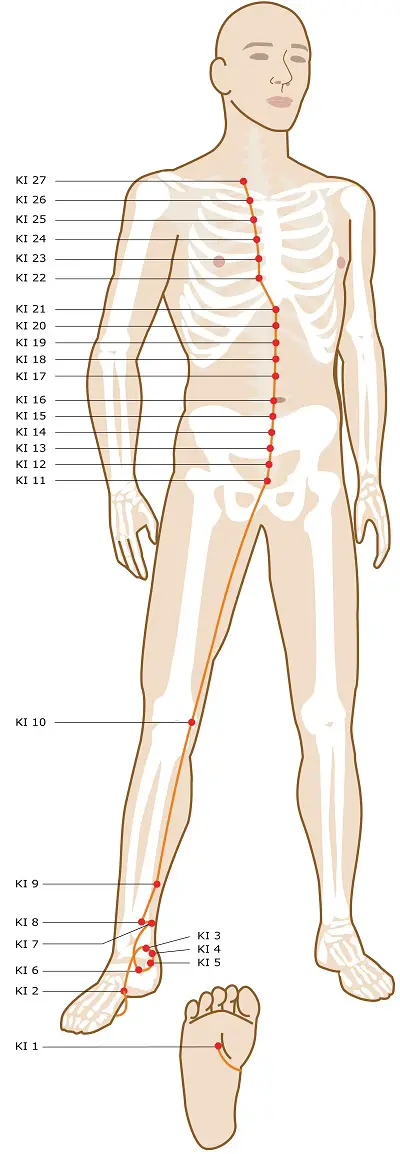
Kidney Meridian Points


KI 1: yong quan / Gushing Spring

Function: Tonifies yin, clears heat, subdues wind, subdues empty-heat, calms the mind, restores consciousness, clears the brain.

Indications: Headache, blurring of vision, dizziness, sore throat, dryness of tongue, loss of voice, dysuria, infantile convulsions, feverish sensation in the sole, loss of consciousness.


KI 2: ran gu / Blazing Valley

Function: Clears empty-heat, cools blood, invigorates Yin Motility Vessel.

Indications: Pruritus vulvae, prolapse of uterus, irregular menstruation, nocturnal emission, hemoptysis, thirst, diarrhea, swelling and pain of the dorsum of foot, acute infantile omphalitis.


KI 3: tai xi / Great Ravine

Function: Tonifies the Kidneys, benefits essence, strengthens the lower back and knees, regulates the uterus.

Indications: Sore throat, toothache, deafness, tinnitus, dizziness, spitting of blood, asthma, thirst, irregular menstruation, insomnia, nocturnal emission, impotence, frequency of micturition, pain in the lower back.


KI 4: da zhong / Large Goblet

Function: Strengthens the back, lifts the spirit.

Indications: Spitting of blood, asthma, stiffness and pain of the lower back, dysuria, constipation, pain in the heel, dementia.


KI 5: shui quan / Water Spring

Function: Benefits urination, promotes blood circulation, stops abdominal pain, regulates uterus.

Indications: Amenorrhea, irregular menstruation, dysmenorrhea, prolapse of uterus, dysuria, blurring of vision.


KI 6: zhao hai / Shining Sea

Function: Nourishes yin, benefits the eyes, calms the mind, invigorates the Yin Motility Vessel, cools the blood, benefits the throat, promotes the function of the uterus, opens the chest, cools heat, calms spirit, benefits throat.

Indications: Irregular menstruation, morbid leukorrhea, prolapse of uterus, pruritus vulvae, asthma, frequency of micturition, urine retention, constipation, epilepsy, insomnia, sore throat.


KI 7: fu liu / Recover Flow

Function: Tonifies the Kidneys, resolves damp, eliminates edema, strengthens the lower back, regulates sweating.

Indications: Edema, abdominal distension, diarrhea, borborygmus, muscular atrophy of the leg, night sweating, spontaneous sweating, febrile diseases without sweating.


KI 8: jiao xin / Intersection Reach

Function: Removes obstructions from the channel, stops abdominal pain, removes masses, regulates menses.

Indications: Irregular menstruation, dysmenorrhea, uterine bleeding, prolapse of uterus, diarrhea, constipation, pain and swelling of testes.


KI 9: zhu bin / Guest House

Function: Calms the mind, tonifies Kidney yin, opens chest, regulates the Yin Linking Vessel.

Indications: Mental disorders, pain in the foot and lower leg, hernia.


KI 10: yin gu / Yin Valley

Function: Expels dampness from the Lower Energizer, tonifies Kidney yin.

Indications: Impotence, hernia, uterine bleeding, dysuria, pain in the knee and popliteal fossa, mental disorders.


KI 11: heng gu / Pubic Bone

Function: Boosts the Stomach and disinhibits damp.

Indications: Fullness and pain of the lower abdomen, dysuria, enuresis, nocturnal emission, impotence, pain of genitalia.


KI 12: da he / Great Manifestation

Function: Supplements Kidney Qi, regulates the Penetrating and Conception vessels.

Indications: Nocturnal emission, impotence, morbid leukorrhea, pain in the external genitalia, prolapse of uterus.


KI 13: di xue / Qi Hole

Function: Tonifies the Kidneys and essence, removes obstructions from the channel.

Indications: Irregular menstruation, dysmenorrhea, dysuria, abdominal pain, diarrhea.


KI 14: si man / Fourfold Fullness

Function: Supplements Kidney Qi, regulates the Penetrating and Conception vessels, promotes free flow through the waterways.

Indications: Abdominal pain and distension, diarrhea, nocturnal emission, irregular menstruation, dysmenorrhea, postpartum abdominal pain.


KI 15: zhong zhu / Central Flow

Function: Nourishes the Kidney channel, regulates the Penetrating and Conception vessels, disinhibits the Lower Energizer.

Indications: Irregular menstruation, abdominal pain, constipation.


KI 16: huang shu / Vitals

Function: Removes obstructions from the channel, tonifies the Kidneys, benefits the Heart.

Indications: Abdominal pain and distention, vomiting, constipation, diarrhea.


KI 17: shang qu / Intestine Bend

Function: Fortifies Spleen, disinhibits damp, soothes sinews, quickens the connecting vessel.

Indications: Abdominal pain, diarrhea, constipation.


KI 18: shi guan / Stone Pass

Function: Fortifies the center and harmonizes Stomach, frees intestines and abducts stagnation.

Indications: Vomiting, abdominal pain, constipation, postpartum abdominal pain, sterility.


KI 19: yin du / Yin Metropolis

Function: Fortifies the Spleen and harmonizes the Stomach, regulates Qi dynamic and frees abdominal Qi, regulates the Penetrating and Conception vessels.

Indications: Borborygmus, abdominal pain, epigastric pain, constipation, vomiting.


KI 20: tong gu / Open Valley

Function: Fortifies the Spleen and harmonizes the Stomach, loosens the chest and rectifies Qi.

Indications: Abdominal pain and distension, vomiting, indigestion.


KI 21: you men / Dark Gate

Function: Abdominal pain and distension, indigestion, vomiting, diarrhea, nausea, morning sickness.

Indications: Courses the Liver and rectifies Qi, fortifies the Spleen and harmonizes the Stomach, clears abdominal heat.


KI 22: bu lang / Corridor Walk

Function: Diffuses the Lung and suppresses cough, downbears counterflow and stops vomiting.

Indications: Cough, asthma, distension and fullness in the chest and hypochondriac region, vomiting, anorexia.


KI 23: shen feng / Spirit Seal

Function: Tonifies the Kidneys, calms the mind.

Indications: Cough, asthma, fullness in the chest and hypochondriac region, mastitis.


KI 24: ling xu / Spirit Ruings

Function: Tonifies the Kidneys, calms the mind.

Indications: Cough, asthma, fullness in the chest and hypochondria region, mastitis.


KI 25: shen cang / Spirit Storehouse

Function: Tonifies the Kidneys, calms the mind.

Indications: Cough, asthma, chest pain.


KI 26: yu zhong / Lively Center

Function: Loosens chest and promotes smooth flow of Qi, calms dyspnea and relieves cough.

Indications: Cough, asthma, accumulation of phlegm, fullness in the chest and hypochondriac region.


KI 27: shu fu / Shu Mansion

Function: Stimulates the Kidney function of reception of Qi, subdues rebellious Qi, stops cough, calms asthma, resolves phlegm.

Indications: Cough, asthma, chest pain.


Primary Functions


  • Influencing the reproductive organs, growth of the body in general and bodily development.
  • Controlling the production of bone marrow, brain material and fluids, and the health of the bones in general.
  • Aiding the production of blood cells.
  • Dominating water and fluids throughout the body.
  • Controlling the reception of chi energy.
  • Influencing the health of the ears.
  • Dominating the anus and urethra.

Common Uses


  • Aiding in the removal of pathogens from the head.
  • Treating night sweating.
  • Treating excessive thirst.
  • Treating wasting disorder (excessive deterioration of muscle and fat).
  • Aiding in the treatment of headaches and dizziness caused by Liver meridian energy disruption.
  • Balancing Kidney fluid levels.
  • Reducing restlessness, insomnia, poor memory, palpitations, epilepsy, mania, and susceptibility to fright.
  • Aiding the lungs in the treatment of cough, coughing up blood, dyspnoea (difficult breathing), asthma, wheezing, and other lung-related illness.
  • Strengthening the kidneys in the treatment of edema (swelling caused by fluid retention), and urinary disorders.
  • Strengthening Kidney meridian energy to increase sexual libido, and to treat impotence, seminal emission issues, and other sexual disorders.
  • Strengthening Kidney meridian energy to improve body heat in the lower torso, legs, and feet.
  • Strengthening the lower spinal area.
  • Improving the health of the teeth.
  • Increasing the health of the ears, such as while treating tinnitus and hearing deficiency.
  • Treating diseases of the uterus such as infertility, menstruation disorders, uterine prolapse, post-partum disorders, and other reproductive problems.
  • Improving the function of the bladder and intestines to treat difficult urination, retention of urine, painful urinary tract, overly dark or discolored urine, diarrhea, dysentery, hernia, and more.
  • Treating itching, pain, or swelling of the genitals.
  • Treating pain of the lower abdominal area.
  • Removal of constipation caused by dryness or fluid imbalance, related to the kidneys' ability to regulate the body's fluids.

Kidney Meridian Channels & Sinews


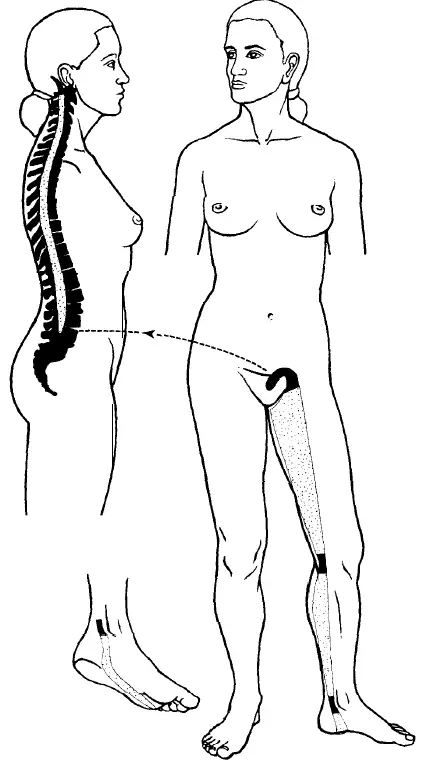
The Kidney meridian is the only acupuncture meridian that features a point on the bottom of the foot.


The meridian begins here at acupoint KI1 and travels up the leg, until it reaches near the center of the torso, where it continues up the body until it ends near the collarbone area on the upper chest.


But the Kidney meridian also features several extraneous channels of energy that branch off of it and influence nearby parts of the body.


Let's take a look at the Kidney secondary energy channels.


Kidney luo-connecting channel
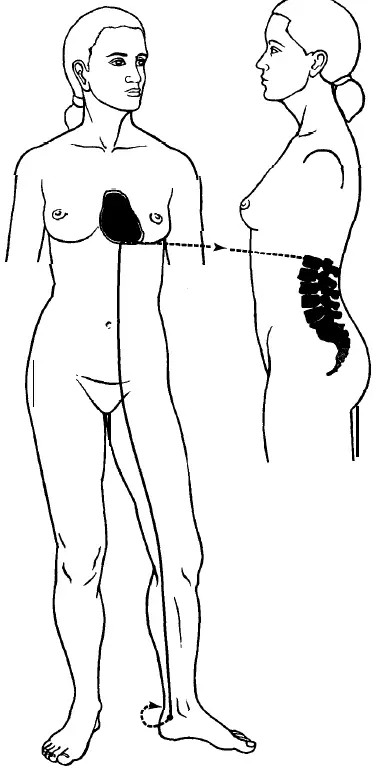
The Kidney luo-connecting channel

First up we have the Kidney luo-connecting channel, which begins on at acupoint KI4 on the side of the foot.


From the ankle, the luo-connecting channels goes two directions.


Part of it circles behind the ankle and connects with the Bladder meridian near acupoint BL60 on the back of the ankle.


But the main portion of the luo-connecting channel travels up the leg alongside the primary Kidney meridian.


Once it reaches the groin area, it travels up the center of the torso until it hits the center of the chest slightly below the pericardium (the tissue surrounding the heart).


From there, the Kidney luo-connecting channel goes back into the middle back portion of the spine.


Kidney divergent channel
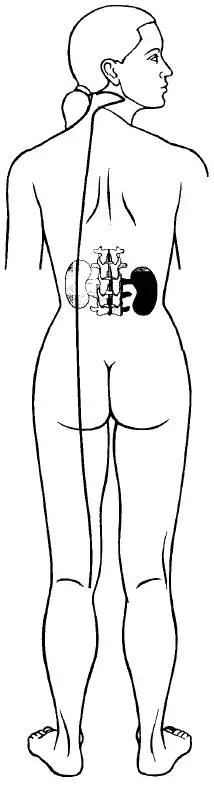
The Kidney divergent channel

Next up is the Kidney divergent channel.


This energy pathway appears at the back of the knee area, where it disconnects from the primary Kidney meridian near acupoint KI10.


It travels up the back of the leg, through the buttocks, and up the back all the way until it reaches the neck.


On its way through the leg, it connects with the Bladder divergent channel.


It also passes through the physical kidney in the torso area, as well as the Girdling vessel near the waist.


At the top of the pathway, it reaches inside the neck and passes through the base of the tongue.


From there, it emerges on the back of the neck where it ends by connecting with the primary Bladder meridian near the acupoint BL11.


Kidney sinew channel
The Kidney sinew channel

Finally, we have the Kidney sinew channel.


This pathway of muscle and tissue begins beneath the little toe of the foot, near the first primary Kidney meridian acupoint KI1.


At this starting point, the Kidney sinew channel is partially connected to the Spleen sinew channel, which also begins on the foot.


The Kidney sinew channel binds to the ankle bone, then travels up the back side of the leg until it also binds to the knee bone area.


On its way up the upper leg, it partially rejoins with the Spleen sinew channel as it makes its way towards the genitals.


From the genital area, a branch of the Kidney sinew channel separates and traverses internally to the base of the spine, where it then travels up the entire spine.


Near the top of the spine, the Kidney sinew channel ends by converging with the Bladder sinew channel.


The 12 Primary Meridians


The 2 Major Extraordinary Vessels


The 6 Minor Extraordinary Vessels


Original article and pictures take www.smarterhealing.com site

среда, 20 ноября 2013 г.

Keep Pressing This Point For 2 Minutes! Then See What Will Happen To Your Body!

Keep Pressing This Point For 2 Minutes! Then See What Will Happen To Your Body!

This point can be very important for you and is located on the webbing between the big and the second toe. What you need to do now is keep pressing this point for about 2 minutes a day. by pressing this point on both of your feet, you are helping in regulation and refreshment of the liver. Stimulating thin point can also help you in treating vision problems, menstrual cramps, headaches, lower back pain, sleeping disorders and insomnia.


Legionella Testing Lab -
High Quality Lab Results
CDC ELITE & NYSDOH ELAP Certified - Fast Results North America Lab Locations legionellatesting.com

Three Yin Crossing:


three-yin-crossing

This point is located three finger-widths above the inner ankle bone along the back of the tibia. Applying pressure on this point on both of your feet will lead to a proper energy and blood flow throughout your whole body. By stimulating this point you will be able to reduce your knee pain and your lower back pain. Also this point will help you in the treatment of many gynecological problems like PMS, painful or irregular menstruation, insomnia, dizziness and it will also reduce the stress levels.


Very Important Note– This point should not be stimulated during pregnancy.


Source: Full Speed News


Original article and pictures take healthtipssource.com site

вторник, 12 ноября 2013 г.

Kapha, Pitta, Vata, Yada Yada

Kapha, Pitta, Vata, Yada Yada

Ever heard of Ayurvedic medicine? Curious about your dosha? Don’t know what I’m talking about? Read on, my friend, read on!


Ayurvedic medicine is centered on the belief that each person has his or her own unique constitution and that understanding our unique qualities is an essential component of our health and happiness. The idea is that we are comprised of three vital energies (doshas): vata, pitta, and kapha. You may demonstrate one dosha strongly or you may be a combination of two doshas. Your dosha could also change based on a phase in your life. For example, children tend to demonstrate kapha more strongly, pitta in adolescence, and become vata in old age. An undisturbed doshic balance means a happy, healthy person! When sick, understanding what is throwing off your dosha can help you get back to health.


Ayurvedic medicine started in India about 5,000 years ago, but the tradition is recently gaining recognition in western culture. The first step is understanding your dosha, then learning how your body changes in relation to your doshic balance and how to prevent sickness based on the Ayurvedic principles.


I’m borrowing some of the information from a great book called The Book of Ayurveda: A Holistic Approach to Health and Longevity. Here are the basics (and I will say, these descriptions are not particularly flattering!):


VATA: air


dry, brittle, crisp, erratic, fidgety, scattering, sprawling, scaly, scratchy, empty, obvious, discreet, hidden, sensitive, flimsy, fragile, skinny, animated, changeable, swift, glassy, bitter, cool


creativity, enthusiasm, freedom, generosity, joy, vitality


“Vata skin is thin, dry, darkish, and cool, and vata hair is thin, dark, coarse, and either kinky or curly. The face is long and angular….the neck is thin and scrawny. The vata nose is small and narrow, may be long, crooked, or asymmetrical. Vata eyes are small, narrow, or sunken, dark brown or gray in color, with a dull luster. The vata mouth is small, with thin, narrow, or tight lips.”


PITTA: fire


oily, sharp, inquisitive, strong, fluid, bright, fire, fair, radiant, burning, eager, fiery, sweltering, spicy, slippery, smooth, structureless


ambition, concentration, confidence, courage, enthusiasm for knowledge, happiness, intelligence


“Pitta skin is fair, soft, lustrous, and warm, and tends to burn easily in the sun. The skin has many freckles, many moles, and a tendency to rashes. Pitta hair is fine and soft, either fair or reddish. The face is heart-shaped, often with a pointed chin. The neck is average and in proportion. The nose is neat, pointed, and average in size. Pitta eyes are average in size, either light blue, light gray, or hazel in color, with an intense luster. The pitta mouth is medium with average lips. Teeth are medium sized and yellowish.”


KAPHA: water


dense, lethargic, slippery, sleepy, tardy, clammy, mucusy, smooth, soft, firm, opaque, thick, comfortable, creamy, cushiony, mushy, receptive, calm, still, immobile


caring, centeredness, compassion, contentment, faith, fulfillment, groundedness, patience, sense of being nourished, stability, support, tenderness


“Kapha skin is thick, oily, pale, white, and cold. Kapha hair is plentiful, thick, wavy, lustrous, and generally brown. The face is large, rounded, and full. The neck is solid, with a tree-trunk quality. The kapha nose is large and rounded. Kapha eyes are attractive and large, blue or light brown in color. The kapha mouth is large, with big, full lips. Teeth are big and white, set in strong gums.”


kapha pitta vata

Ready to stop guessing which is you? Take this quiz to find out what your dosha is! This is a great time of year to find out your dosha because the seasons are changing, which is a good time to evaluate your health and recalibrate for autumn. Anyone else getting wiped out by a terrible cold? Daggone kapha got me again!


Which one are you??? Firy pitta? Watery kapha? Breezy vata?


Original article and pictures take secure.gravatar.com site